Incident details
- Updated on
- Date of incident
- January 13, 2026
- Targets
- Media
- Status of prior restraint
- Dropped
- Mistakenly released materials?
- No
Prior Restraint
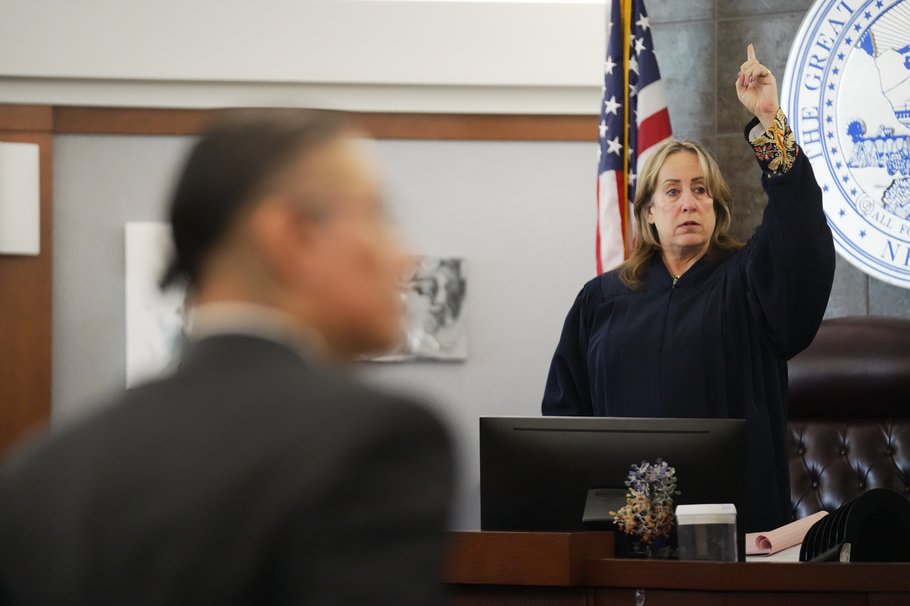
Judge Jessica Peterson, right, briefly imposed restrictions on media coverage of the sexual assault trial of actor Nathan Chasing Horse, left, on Jan. 13, 2026, in Las Vegas, Nevada. She reversed course the next day.
Appeals court says judge violated Constitution by ejecting Review-Journal
The constitutional rights of reporters from the Las Vegas Review-Journal were violated when a state judge ejected them from her courtroom and restricted the scope of their coverage at a high-profile trial, a panel of three judges for the Nevada Supreme Court ruled on Jan. 28, 2026.
The news outlet reported on the trial of Nathan Chasing Horse, an actor from the 1990 movie “Dances with Wolves,” who was convicted on Jan. 30 of sexually assaulting Indigenous women and girls.
On Jan. 13, Clark County District Judge Jessica Peterson, who presided over the trial, barred interviews with witnesses or other parties at the courthouse while the trial was underway, and ordered the media not to publish any identifying information about victims without permission and about a police officer who was testifying.
Peterson issued a revised order narrowing the restrictions after a Review-Journal attorney argued that they constituted an illegal prior restraint.
But on Jan. 21, Peterson asked the media to promise not to name an alleged victim of Chasing Horse who was scheduled to testify that day. She ejected Review-Journal reporters Noble Brigham and Akiya Dillon, and photojournalist Bizuayehu Tesfaye after they refused to do so.
The judge allowed other news organizations to watch the alleged victim’s testimony, and only let the Review-Journal back into the courtroom after the testimony concluded.
The Review-Journal then asked the Nevada Supreme Court to order Peterson to retract her restrictions on press coverage of the trial and forbid her to implement any others, or to eject the Review-Journal again.
The outlet accused Peterson of violating the First Amendment, pointing out that prosecutors had already publicized the victim’s name, that she testified under a pseudonym, and that other journalists were allowed to remain in the courtroom when the Review-Journal was ejected.
On Jan. 28, the Nevada Supreme Court granted the Review-Journal’s request, ordering the lower court to allow the Review-Journal to publish the victim’s name and other publicly available information, and forbidding Peterson to exclude the outlet from the trial for refusing to comply with coverage restrictions.
“The district court manifestly abused its discretion,” the three-judge panel wrote, ruling that ejecting the Review-Journal staff “served only to violate petitioners’ right of access and punish them for not submitting to an unconstitutional restraint.”
Review-Journal Executive Editor Glenn Cook celebrated the ruling.
“This case was never about identifying or not identifying the victim of an alleged sexual assault. This was about the press’s ability to report what happens in open court,” Cook said. “We’re thrilled the Supreme Court has upheld the right of the press to serve as the eyes and ears of the public in any court of law.”
Nevada judge demands media not name victim, ejects Review-Journal for not complying
Las Vegas Review-Journal staff were removed from a Nevada courtroom on Jan. 21, 2026, after they refused to agree to the judge’s demand that they not publish the name of an alleged victim.
Clark County District Judge Jessica Peterson asked that all members of the press covering a high-profile sexual assault trial promise not to name the witness testifying that day. She ejected Review-Journal reporters Noble Brigham and Akiya Dillon and photojournalist Bizuayehu Tesfaye after they refused, the paper reported.
The paper noted that the alleged victim has been identified in public court records, and that it has not previously published her name.
Nathan Chasing Horse, an actor who appeared in the 1990 movie “Dances with Wolves,” is on trial, accused of sexually assaulting multiple women.
On Jan. 13, Peterson issued a decorum order barring interviews with witnesses or other parties at the courthouse while the trial is underway, and restricting the media from publishing any identifying information about victims without permission and about a police officer who was testifying.
In response, a Review-Journal attorney wrote to the court arguing that the restrictions violated the First Amendment and were an unconstitutional prior restraint. Peterson then issued a revised order narrowing the restrictions on publication, and allowing media interviews so long as jurors cannot overhear them and witnesses do not discuss their testimony.
But on Jan. 21, Peterson announced she would restrict the media from naming an alleged victim who was scheduled to testify that day. She asked the press in the courtroom if they wanted their attorneys to respond to the restriction and paused the proceedings while the Review-Journal staff contacted their attorney, the paper reported.
When the Review-Journal staff told Peterson they would not comply with the restriction, she ejected them, refusing their request to wait until their attorney arrived. “I am not going to allow this victim to be revictimized by the Las Vegas Review-Journal,” Peterson said.
The judge allowed other news organizations to watch the alleged victim’s testimony, and allowed the Review-Journal back into the courtroom after she had finished testifying.
The outlet’s attorney arrived in the courtroom after the journalists had been removed, and argued that conditioning their access to the courtroom on the content of their reporting violated the First Amendment.
Brigham told the U.S. Press Freedom Tracker, “I have been removed from other hearings before, but I have never been in a situation exactly like what I experienced yesterday, where only some members of the media were ejected, others were allowed to stay and the right to coverage was conditioned on an agreement to prior restraint.”
Glenn Cook, the paper’s executive editor, called the judge’s actions “unheard of and outrageous.” He said that the Review-Journal does not typically publish sexual assault victims’ names but has the right to do so if it chooses.
“The court cannot tell the press what to report,” Cook said. “The press decides what to publish, period.”
A Nevada judge imposed restrictions on media coverage in a prominent sexual assault trial in Las Vegas on Jan. 13, 2026, before modifying the order after objections from the Las Vegas Review-Journal.
The initial decision occurred as reporters prepared to cover the high-profile case of Nathan Chasing Horse, an actor who appeared in the 1990 movie “Dances with Wolves.” He is accused of sexually assaulting multiple women in the Native American community under the guise of his role as a self-proclaimed spiritual leader and healer.
Clark County District Judge Jessica Peterson issued a decorum order that barred interviews with witnesses or other parties at the courthouse while the trial is underway. It restricted the media from publishing any identifying information about victims without permission and about a police officer who was testifying.
Later that day, Review-Journal attorney Benjamin Lipman sent a letter to the court arguing the restrictions violated the First Amendment and amounted to an unconstitutional prior restraint.
“Attending court proceedings is a constitutional right, not a mere privilege,” the letter said.
The next day, Peterson issued a revised decorum order removing the interview prohibition and narrowing the publication restrictions.
In a statement, the judge said her order had been used by the district court previously without issue, but that she decided that provisions challenged by the news organization could be seen as overly broad, the Review-Journal reported.
The amended order now allows media interviews so long as jurors cannot overhear them and witnesses do not discuss their testimony.
The U.S. Press Freedom Tracker catalogs press freedom violations in the United States. Email tips to [email protected].
