Incident details
- Date of incident
- January 26, 2026
- Targets
- Media
- Status of prior restraint
- Struck down
- Mistakenly released materials?
- No
Prior Restraint
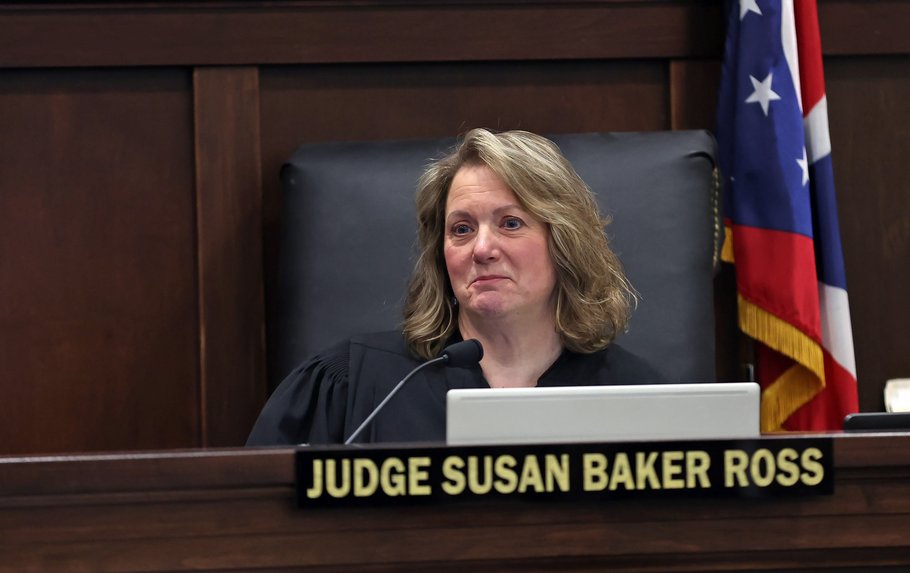
Judge Susan Baker Ross, seen during the trial of two former FirstEnergy executives in Akron, Ohio, after a Jan. 26, 2026, prior restraint she imposed on media was struck down by the Ohio Supreme Court.
A county judge in Akron, Ohio, imposed restrictions on media coverage of a high-profile bribery trial on Jan. 26, 2026, but the prior restraint was struck down by the state’s Supreme Court several weeks later after three news outlets sued.
Summit County Court Judge Susan Baker Ross’s judicial gag order came just before the start of the trial of two former FirstEnergy executives, who were accused of bribing an Ohio public utility regulator and state lawmakers to pass legislation to bail out the energy company. The defense’s witness list included Ohio Gov. Mike DeWine and Sen. Jon Husted, the former lieutenant governor.
Baker Ross initially issued a broad order restricting media coverage of jurors and witnesses, and requiring journalists to turn over videotapes, photographs or audiotapes at the request of the court, prosecutors or defense attorneys, according to court filings reviewed by the U.S. Press Freedom Tracker.
She amended the order after The Cincinnati Enquirer, the Akron Beacon Journal and The Columbus Dispatch filed suit several days later to block it.
However, the amended order still prevented media publishing “anything that could be used to personally identify any juror or prospective juror.” It also allowed witnesses to object to “media coverage,” like being filmed, videotaped, recorded or photographed. In addition, it would prevent media from being present during a hearing on a witness’s objection to media coverage, even if it occurred in open court.
The three news outlets argued that the judge’s amended order, as it related to the jury, constituted an unlawful prior restraint because it potentially included information revealed in open court or public records. They also argued that she overstepped her authority when she prohibited media from publishing before holding a hearing and without any evidence to support the need for the order.
“Rather than approach juror privacy on a juror-by-juror basis, Respondent issued a blanket order. This is impermissible,” the outlets’ attorney John Greiner wrote.
The outlets also objected to the order’s provision on recording witnesses, citing Ohio rules that govern court procedures. They said the order would improperly grant the wishes of witnesses “without a finding based upon evidence in the record and without allowing all parties affected the opportunity to respond.”
Further, they argued that the order prevented them from recording or photographing potential witnesses, including the defendants, on the basis that they might testify.
The Ohio Supreme Court ruled Feb. 17 that the judge’s amended order “constitutes a prior restraint” as it relates to the publication of jurors’ or prospective jurors’ personal information. The court prevented Baker Ross from enforcing that portion of the order without holding a hearing and making the necessary findings from evidence in the record.
The ruling also prevents her from enforcing the order “to the extent that it prohibits dissemination of information revealed in open court or from publicly available court records.”
In addition, the court found that the amended witness provision was impermissible under Ohio’s constitution, because it excludes the media and its representatives from open hearings on witnesses’ objections to being recorded.
It further agreed with the plaintiffs that the ban was overly broad and could prevent photographs of defendants who might testify.
“We are gratified that the Ohio Supreme Court moved so swiftly on this matter,” Greiner told the Akron Beacon Journal. “Its decision will ensure not only that this trial proceeds in a transparent fashion, but it also provides valuable guidance for future trials.”
The U.S. Press Freedom Tracker catalogs press freedom violations in the United States. Email tips to [email protected].