Incident details
- Date of incident
- March 28, 2026
- Location
- Los Angeles, California
- Arrest status
- Detained and released without being processed
- Arresting authority
- Los Angeles Police Department
- Unnecessary use of force?
- No
Arrest/Criminal Charge
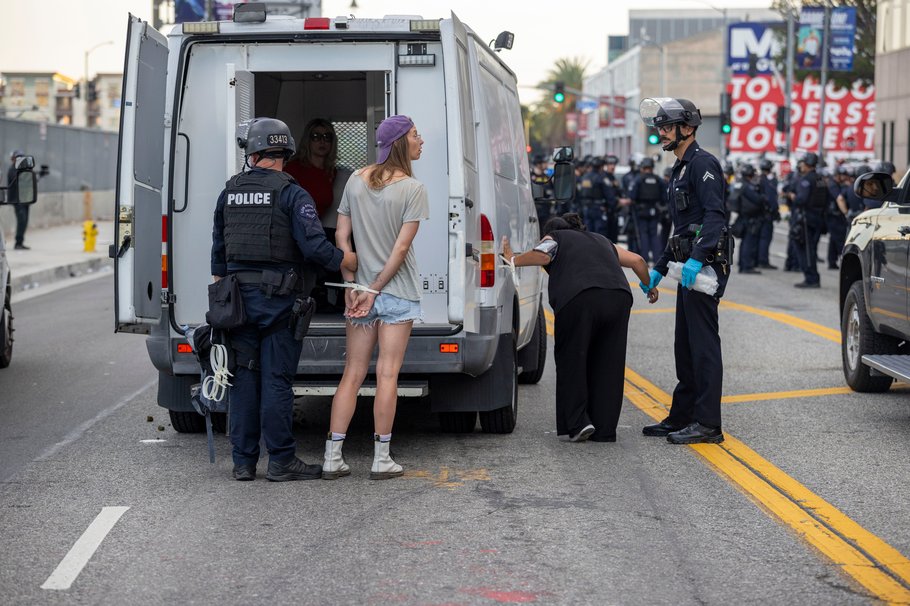
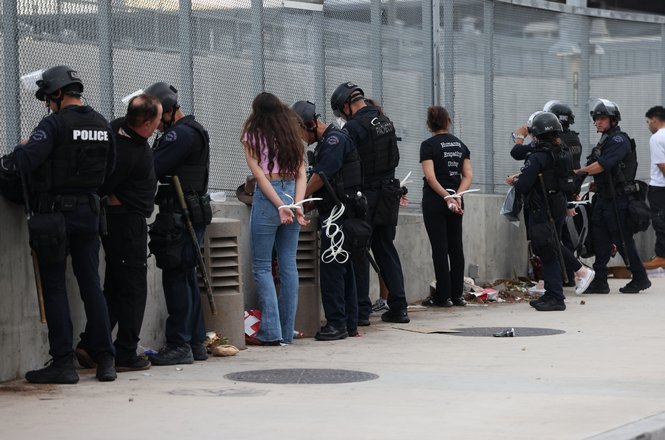
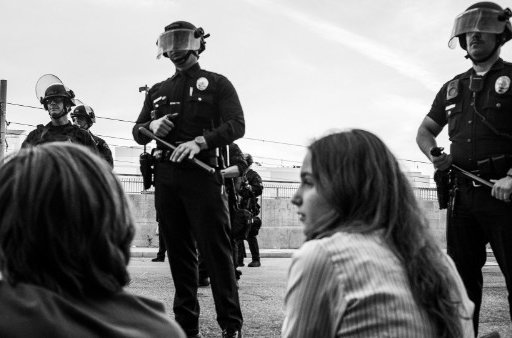
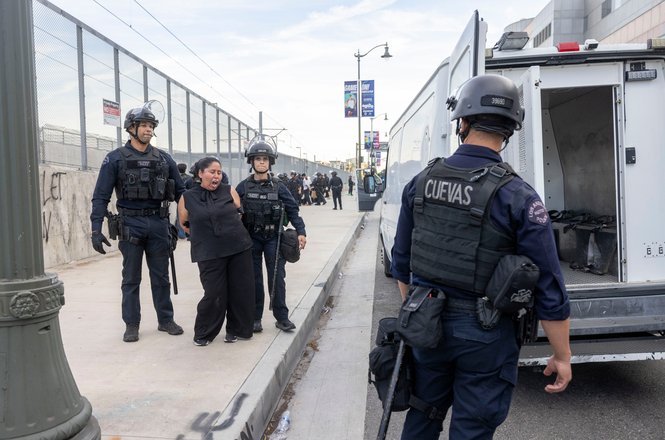
Police arrest a protester outside an immigration detention center in downtown Los Angeles on March 28, 2026. Violet Garcia, editor-in-chief of Los Angeles Pierce College’s The Bull Magazine, was surrounded by police and escorted away from the protest.
Violet Garcia, editor-in-chief of The Bull Magazine at Los Angeles Pierce College, was blocked by police, ordered to show press credentials and led from a protest that she was covering in downtown Los Angeles, California, on March 28, 2026.
The protest followed LA’s “No Kings” demonstration, one of some 3,300 against Trump administration policies that took place that day across the U.S., drawing more than 8 million people nationwide, organizers said.
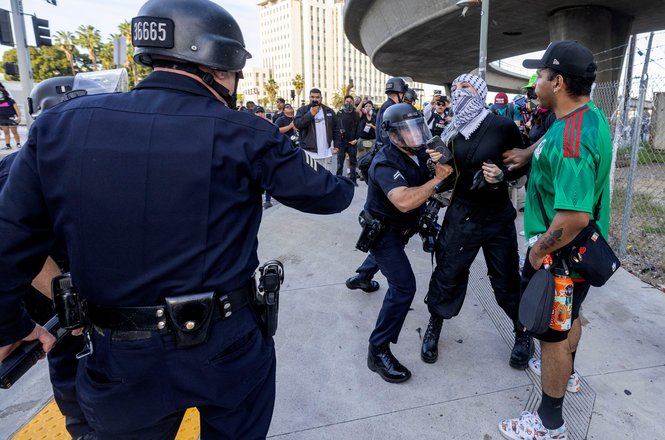
After the main march, people gathered outside the Metropolitan Detention Center, where immigrants are held, and the Roybal Federal Building, locations where many demonstrations have centered since sweeping immigration enforcement began in the city in June 2025. The LA Police Department said 75 people were arrested after officers issued a dispersal order and declared an unlawful assembly.
Garcia told the U.S. Press Freedom Tracker that she arrived to cover the events near the detention center, along with three other student journalists and photographers from the magazine. She was carrying a press pass issued by Pierce College and professional camera equipment.
Garcia said they entered an area near the intersection of Temple and Alameda streets at around 7 p.m. after showing credentials to an officer, whom she described as “collaborative.” The officer told them, however, that they entered at their own risk.
The journalist said the area was heavily barricaded and separate from larger crowds, and that she saw protesters assisting others who had been affected by chemical irritants.
“While I was filming a woman questioning officers about their conduct toward her, a group of media members was suddenly confronted by different, visibly armed officers,” Garcia said, adding that the officers “shouted orders for press to show credentials yet again.”
The conflict escalated, Garcia said, when some journalists resisted showing passes, citing their First Amendment rights, and the LAPD “would no longer allow any of us to leave prior to showing our credentials again, whether we wanted to leave that instant or not.”
“They kept us in a circular group, holding guns in their arms in front of their torsos, and were now screaming orders, not at protesters but at the media. Some who tried to walk away were stopped and forced to wait,” the journalist recounted.
Officers then began “escorting” press out two at a time, she said, walking them back to an intersection a block away. The police warned that they were going to begin arresting people and deploying chemical irritants.
Garcia said that she, her staff and other journalists in the group began to mildly feel the effects of tear gas nearby, but couldn’t see where it was coming from. “Our eyes were stinging, and then it went a little bit past stinging, and they were burning and tearing up, but we were still able to see. Our noses were starting to burn a little bit as well. And then some of my colleagues started to describe a foul taste,” Garcia, who was wearing a KN95 mask, explained.
“Some further protested being sent out, citing that, as press, we had a right to stay and document. The LAPD reiterated it didn’t matter who; if we were in the way, they would spray,” she said.
“Although I was not officially detained, I felt I had no other option. I was physically blocked and stuck in the area. My choices were to move myself or let them move me, regardless of my rights.”
She and her fellow student journalists were ultimately escorted out and then denied reentry to that area, without further explanation.
In a written statement shared April 2, LAPD Chief Jim McDonnell said that police were responding to acts of violence and vandalism and eventually issued a dispersal order. Anyone identifying as a “duly authorized” member of the media was contacted, verified and separated from those facing arrest for failure to disperse, according to the statement.
McDonnell added that any use of force or allegations of mistreatment, including those involving media members, would be investigated and addressed.
“The LAPD recognizes the media’s right to cover events and makes reasonable efforts to accommodate, with those efforts consistent with our primary duty to maintain public safety and order,” the statement said.
The Tracker has documented numerous other instances of journalists being obstructed, detained and assaulted while covering the March 28 protest in LA.
The U.S. Press Freedom Tracker catalogs press freedom violations in the United States. Email tips to [email protected].