Incident details
- Updated on
- Date of incident
- December 1, 2025
- Location
- Tuscaloosa, Alabama
- Case number
- 7:26-cv-00476-EGL
- Case status
- Ongoing
- Type of case
- Civil
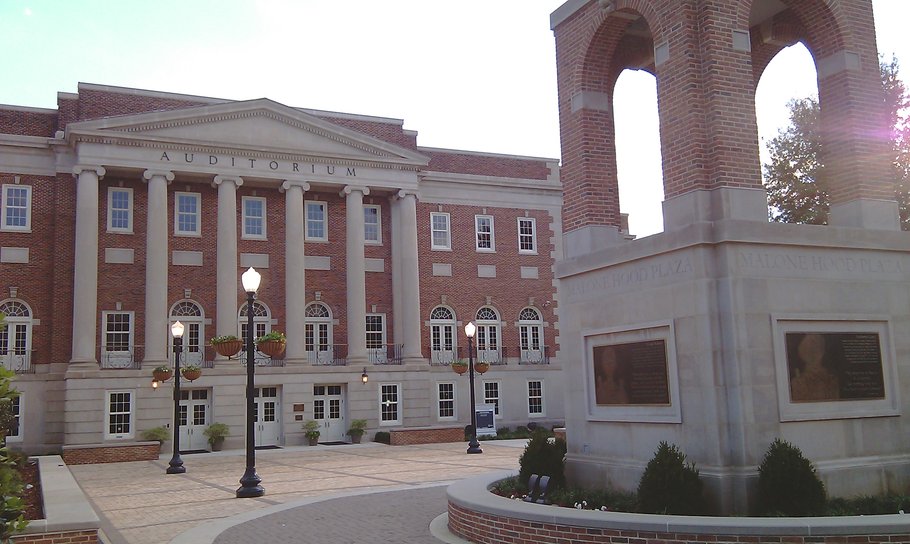
The Tuscaloosa campus of the University of Alabama, above. The state institution closed two student magazines on Dec. 1, 2025, citing Trump administration guidance on unlawful discrimination by recipients of federal funding. Licensed under public domain.
University of Alabama sued over shuttering of 2 student magazines
A group of student journalists at the University of Alabama in Tuscaloosa sued the school’s board of trustees on March 23, 2026, alleging that it violated their First Amendment rights and engaged in viewpoint discrimination when it shut down two student magazines in December.
The university told staff and contributors at the two magazines — Nineteen Fifty-Six, which covers Black student life and culture, and Alice, which focuses primarily on women’s fashion and wellness — that they were being closed because they violated guidance from the Justice Department about funding for diversity, equity and inclusion programs.
The closures followed a July 2025 memo from Attorney General Pam Bondi to the school and other federal funding recipients on complying with antidiscrimination laws, part of the administration’s effort to reverse DEI policies.
The university cited the memo’s reference to “unlawful proxies” — when seemingly neutral criteria substitute for explicit consideration of characteristics like race — to justify shuttering the magazines, claiming their content was targeted at specific groups, even while anyone was free to participate in their work.
The complaint, filed in federal court in Alabama, challenges this justification, noting that Bondi’s memo “does not mention student publications nor suggest that student publications may constitute or run the risk of constituting ‘unlawful proxies.’”
It went on to allege that the university suspended the magazines “because of their editorial viewpoints, while allowing other University-funded student publications—with different editorial viewpoints—to continue operating.”
“Just as the government cannot exclude from a public forum speech on the topic of religion that may be of interest to people of particular religions, the government cannot exclude speech because it believes the viewpoints expressed may be of particular interest to women and Black students,” it argues.
The suit asks the court to find the University of Alabama’s actions unconstitutional, reverse the suspensions and restore the students’ “right to speak through their publications without discriminatory interference from the University.”
The eight plaintiffs — current and prospective student journalists and editorial board members — are represented by the Legal Defense Fund, the American Civil Liberties Union of Alabama and the Southern Poverty Law Center.
Gabrielle Gunter, a plaintiff who had served as Alice’s editor-in-chief, said in a statement, “The ability to create and contribute to spaces that amplify the voices of college students who hold identities that are typically not reflected in campus media is not only important but necessary work.
“Discrimination based on the views of students who seek to create inclusive media for all students has no place in our society, so it’s really important to me to keep fighting for what is right,” she added.
On March 10, Nineteen Fifty-Six and Alice announced that they were rebranding independent of the university as Sixty-Three and Selene, respectively, with funding raised by the group Media Alumni Seeking to Highlight Equity and Diversity.
However, that was just a temporary solution until the publications can return, one of their attorneys, Antonio Ingram of the Legal Defense Fund, told the Alabama Reflector. For instance, the fundraising group is not able to provide faculty advising on campus.
“I would say right now, they’ve been exiled from campus based on their viewpoint,” Ingram said, “and this is a pursuit to really get them back home again.”
The University of Alabama did not respond to a request for comment.
Two student magazines were shut down on Dec. 1, 2025, by the state-run University of Alabama in Tuscaloosa, which said they violated guidance from the Justice Department about funding for diversity, equity and inclusion programs.
Nineteen Fifty-Six covers Black student life and culture, while Alice focuses primarily on women’s fashion and wellness. Both publish print editions in the spring and fall semesters, as well as online content.
The closures came in the wake of a July 29 memo issued by Attorney General Pam Bondi to recipients of federal funding, with guidance on how to comply with antidiscrimination laws, part of the Trump administration’s larger effort to reverse policies promoting DEI.
One section of the memo cautioned against “unlawful proxy discrimination,” explaining, “Unlawful proxies occur when a federally funded entity intentionally uses ostensibly neutral criteria that function as substitutes for explicit consideration of race, sex, or other protected characteristics.”
According to The Crimson White, the university’s student newspaper that first reported the suspensions, Vice President for Student Life Steven Hood told the staff of the two magazines that because their audiences are specific groups, they are considered “unlawful proxies.”
University spokesperson Alex House said in a statement the closures allow the school to “ensure all members of our community feel welcome to participate in programs that receive university funding from the Office of Student Media,” the Alabama Reflector reported.
Neither magazine limited participation based on racial or gender identity.
“I was under the impression that we were protected from being affected by any anti-DEI legislation and rulings because of our First Amendment right to freedom of press, but it appears I was wrong,” Alice Magazine Editor-in-Chief Gabrielle Gunter told the Reflector.
In a statement posted on social media, Kendal Wright, Nineteen Fifty-Six editor-in-chief, said she was “devastated but, regrettably, not surprised” by the decision. She added, “Regardless of our suspension, there will continue to be a need on campus for the stories of the university’s Black community to be told.”
The move drew national attention and sparked anger among students and alumni. One group started a fundraiser for the magazines, raising more than $25,000 in just three days. Those funds will cover the costs for the two spring editions of the magazine, the Media Alumni Seeking to Highlight Equity and Diversity group said.
U.S. Reps. Terri Sewell and Shomari Figures, both Alabama representatives, wrote a Dec. 16 letter to University of Alabama President Peter Mohler to call on the school to reinstate the magazines, saying the decision has “profound implications for free speech, academic freedom, and the University’s stated commitment to fostering an inclusive campus environment.”
The U.S. Press Freedom Tracker catalogs press freedom violations in the United States. Email tips to [email protected].