Incident details
- Date of incident
- March 9, 2026
- Location
- Washington, District of Columbia
- Targets
- Stars and Stripes
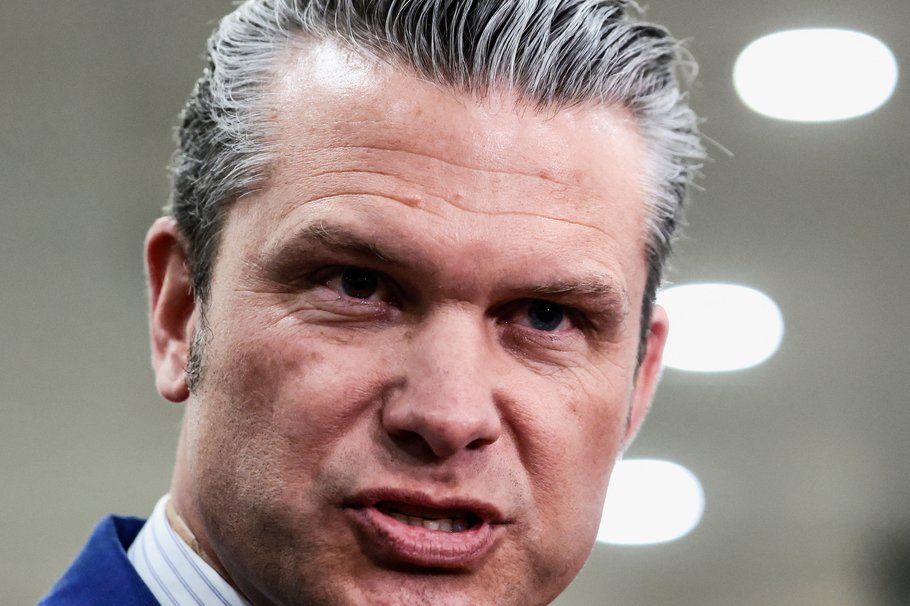
Defense Secretary Pete Hegseth speaks to the media in Washington, D.C. on Jan. 7, 2026.
As the second year of President Donald Trump’s second term began, Defense Secretary Pete Hegseth continued taking steps to intimidate leakers and news outlets that have covered Trump and his administration unfavorably. We’re documenting Hegseth’s efforts in 2026 in this regularly updated report.
Read about Hegseth’s efforts in 2025 to chill coverage here, and how Trump’s other appointees and allies in Congress are striving to intimidate reporters, revoke funding, censor critical coverage and more here.
This article was first published on Feb. 17, 2026.
March 9, 2026 | Pentagon sets increased oversight, content limits for military newspaper
Jan. 15, 2026 | Defense Department announces overhaul of military newspaper, calling it ‘woke’
March 9, 2026 | Pentagon sets increased oversight, content limits for military newspaper
The Department of Defense laid out plans to expand oversight of military newspaper Stars and Stripes in a March 9, 2026, memo, as part of a “modernization” of the outlet that left some press freedom observers alarmed over the potential loss of independence.
The memo, sent by Deputy Defense Secretary Stephen Feinberg and first reported by Stars and Stripes, outlines an “interim policy” governing the outlet that takes effect immediately.
The memo states that Stars and Stripes will continue to “operate with editorial independence.” But it prohibits the outlet’s use of wire service stories, comic strips and editorial cartoons due to the “digital availability of such content globally,” unless an exception is granted by the assistant to the secretary of defense for public affairs.
According to the memo, the “primary justification for Stripes’ continued existence is to deliver content, specifically relevant to Service members and their families, that is not usually covered by commercial media.”
It continued, “Accordingly, there is no operational need to serve as a reprint vehicle for commercial news publications that are otherwise readily accessible.”
Jacqueline Smith, Stars and Stripes’ ombudsman who is charged by Congress with defending the outlet’s editorial independence, told the outlet that without access to wire service content, the paper would lose the ability to provide reporting on topics such as national sports and entertainment, which “contribute to the morale of troops.”
Among other changes, the memo states that the outlet “should” republish Defense Department public affairs materials — clearly labeled as such — as deemed necessary by the publisher, and requires the outlet’s ombudsman to send information previously sent directly to Congress through the department’s Legislative Affairs Office first.
It also bans reporters from making Freedom of Information Act requests in an official capacity, though it does allow for them to make submissions “in their individual capacities” when not acting on behalf of the outlet.
The policy changes came in the wake of a January social media post by Pentagon chief spokesman Sean Parnell, in which he announced plans to overhaul Stars and Stripes and “refocus its content away from woke distractions.”
Stars and Stripes reported that its leadership and staff were not informed of the changes directly, but instead learned of them when the memo was found in a search of the Defense Department website.
Erik Slavin, Stars and Stripes’ editor-in-chief, said in a statement published by the outlet, “It is unlikely that the Pentagon was aware of the extensive modernization that Stars and Stripes had already begun.”
He added, “Over the past year, the changes to our digitally produced news and information have resulted in significant increases in pageviews, engagement and subscribers.”
The Pentagon memo also states that all content must be consistent with “good order and discipline,” a phrase used in the Uniform Code of Military Justice.
In an interview with NPR, Slavin expressed concern about that aspect of the policy as it applied to staff who are members of the military. “If they were to complete a story that the Defense Department did not like, and did not find ‘consistent with good order and discipline,’ would they be in legal jeopardy?” Slavin said. “We don’t know the answer to that.”
Smith, the ombudsman, told The Washington Post in an interview that the memo “threatens Stars and Stripes’ continued editorial independence, and it does so at the detriment of the troops who rely on the newspaper for complete coverage and continued accurate coverage that is not propaganda.”
Tim Richardson, journalism and disinformation program director at PEN America, said, “We are alarmed that a Pentagon memo claims to preserve the independence of Stars and Stripes while simultaneously imposing new restrictions that undermine it.”
He called on Congress to “reaffirm First Amendment protections for Stars and Stripes’ editorial independence and ensure the decades-long firewall between the Pentagon and the newsroom remains firmly intact.”
Parnell, in a March 13 statement reported by Stars and Stripes, said that the Defense Department is returning the outlet to “its original mission: an independent news source for service members stationed overseas that is by the warfighter and for the warfighter.”
Jan. 15, 2026 | Defense Department announces overhaul of military newspaper, calling it ‘woke’
The Department of Defense announced plans on Jan. 15, 2026, to take over editorial decision-making for the military newspaper Stars and Stripes, in a move that jeopardizes its long-held editorial independence.
In a statement posted to social media, Pentagon spokesperson Sean Parnell defended the move as “returning Stars & Stripes to its original mission: reporting for our warfighters.”
“We will modernize its operations, refocus its content away from woke distractions that syphon morale, and adapt it to serve a new generation of service members,” he continued. “It will focus on warfighting, weapons systems, fitness, lethality, survivability, and ALL THINGS MILITARY. No more repurposed DC gossip columns; no more Associated Press reprints.”
While the newspaper is partially funded by the Pentagon and its staffers are department employees, the outlet reported that it is directed to emulate the best practices of commercial news organizations and provide a free flow of “news and information to its readership without news management or censorship.”
Stars and Stripes Editor-in-Chief Erik Slavin wrote in a Jan. 15 note to staff that the military deserves independent news.
“The people who risk their lives in defense of the Constitution have earned the right to the press freedoms of the First Amendment,” Slavin wrote. “We will not compromise on serving them with accurate and balanced coverage, holding military officials to account when called for.”
The Daily Wire reported that department officials told the outlet that Stars and Stripes’ content will no longer be written by its civilian staff but by active-duty service members. Half the newspaper’s content will be generated by the Pentagon, including materials written by the department and images captured by combat cameras.
Stars and Stripes reported that its ombudsman, Jacqueline Smith, said the changes would amount to “unnecessary control and the perception of propaganda.” The ombudsman is a congressionally mandated position tasked with ensuring the outlet’s editorial independence.
“That is public relations, not independent journalism,” she said. “The other ‘fifty percent’ of the content would hold no credibility.”
The news came the day after The Washington Post reported that applicants for positions at the newspaper were being asked, “How would you advance the President’s Executive Orders and policy priorities in this role? Identify one or two relevant Executive Orders or policy initiatives that are significant to you, and explain how you would help implement them if hired.”
Leadership at Stars and Stripes wasn’t aware of the questions until asked about them, Smith told the Post, later confirming that they had been added by the U.S. Office of Personnel Management without notifying them.
“Asking prospective employees how they would support the administration’s policies is antithetical to Stripes’ journalistic and federally mandated mission,” Smith told the Post. “Journalistically, it’s against ethics, because reporters or any staff member — editors, photographers — should be impartial.”
Democrats on the Senate Armed Services Committee told Stars and Stripes that any efforts to infringe on the newspaper’s editorial independence amounted to an attack on the First Amendment, with several voicing support for the newspaper. None of the Republican lawmakers contacted by Stars and Stripes responded to requests for comment.
The U.S. Press Freedom Tracker catalogs press freedom violations in the United States. Email tips to [email protected].
Related Incidents
-

Pete Hegseth targets news outlets, leakers as defense secretary
- Date of incident
- Location
- Washington, District of Columbia
- Targets
- Haley Britzky (CNN), Media, The New York Times
-
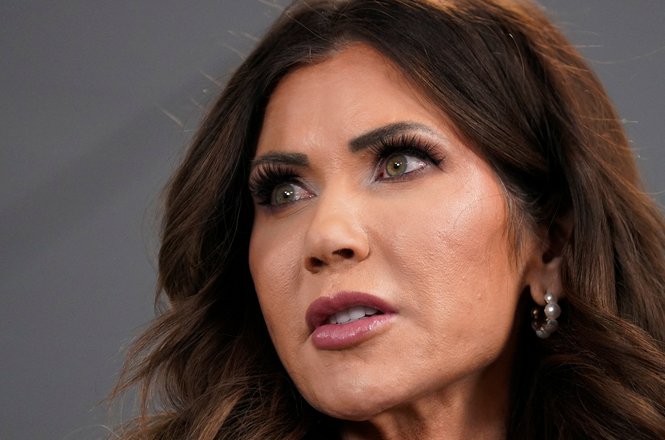
Homeland Security Secretary Kristi Noem targets press, leakers
- Date of incident
- Location
- Washington, District of Columbia
- Targets
- Shawn Cohen (Daily Mail)
-
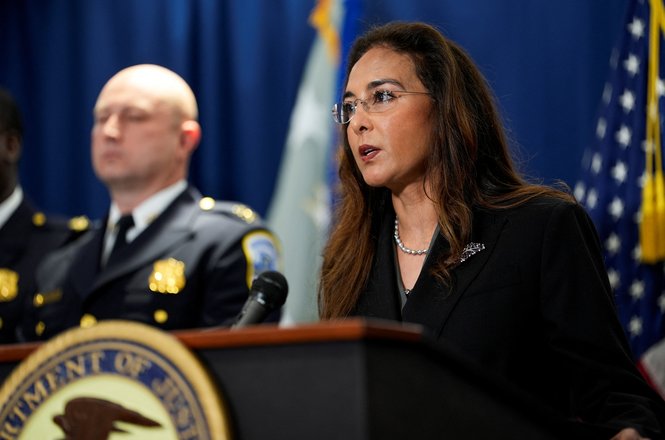
Harmeet Dhillon targets journalists as assistant attorney general
- Date of incident
- Location
- Washington, District of Columbia
- Targets
- Don Lemon (Independent), Unidentified producer 2 (Independent)
-

Trump, his administration move to punish outlets during second term
- Date of incident
- Location
- Washington, District of Columbia
- Targets
- CNN, Media, Middle East Broadcasting Networks, National Public Radio, PBS News, Radio Free Asia, Radio Free Europe/Radio Liberty, Radio y Televisión Martí, The New York Times, Voice of America