Incident details
- Date of incident
- December 2025
- Location
- Newport News, Virginia
- Legal orders
-
-
2703(d) court order
for
other
- Dec. 31, 2025: Pending
- Unknown date: Objected to
- Unknown date: Upheld
- June 8, 2026: Objected to
- Nov. 10, 2026: Pending
-
2703(d) court order
for
other
- Legal order target
- Third-party: LinkedIn (tech company)
- Legal order venue
- Federal
Subpoena/Legal Order
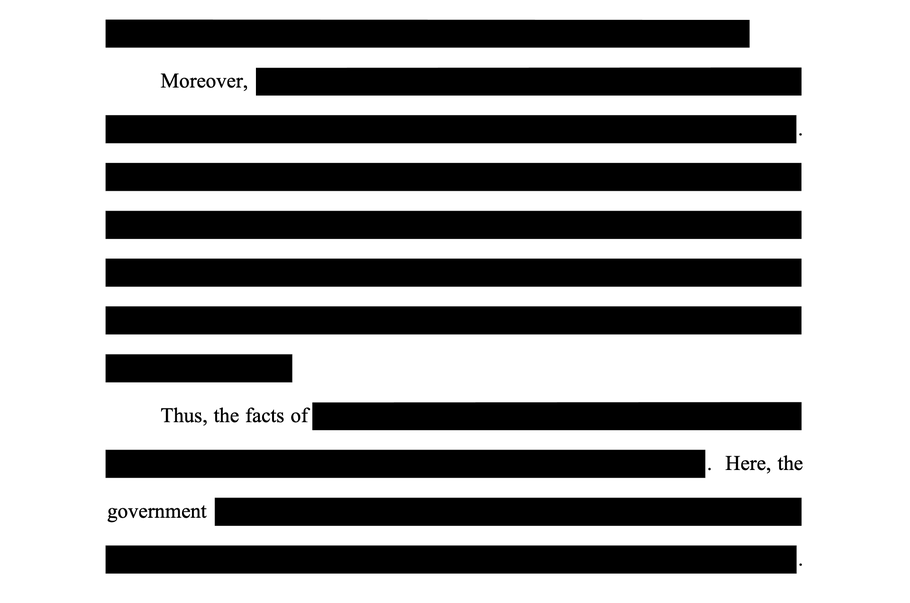
A portion of a redacted government filing, part of a June 2026 appeal by LinkedIn arguing that the Department of Justice was overbroad in its 2025 demand for data on messages and connection invitations sent and received by five New York Times reporters.
At least five New York Times journalists had their LinkedIn profiles targeted by the Department of Justice in 2025 as part of an ongoing leak investigation, according to court filings reviewed by the U.S. Press Freedom Tracker.
Details of the timeline of the requests and filings are unclear because the underlying case is under seal, as are most of the filings in the appeal. The few unsealed filings are heavily redacted.
According to a court filing unsealed Nov. 16, 2026, the Trump administration obtained a 2703(d) court order — an order under the Stored Communications Act that compels tech providers to turn over non-content records and metadata — demanding the professional networking site turn over data about freelancer Matthew Cole and Times reporters Julian E. Barnes, Adam Entous, Dave Philipps and Eric Schmitt.
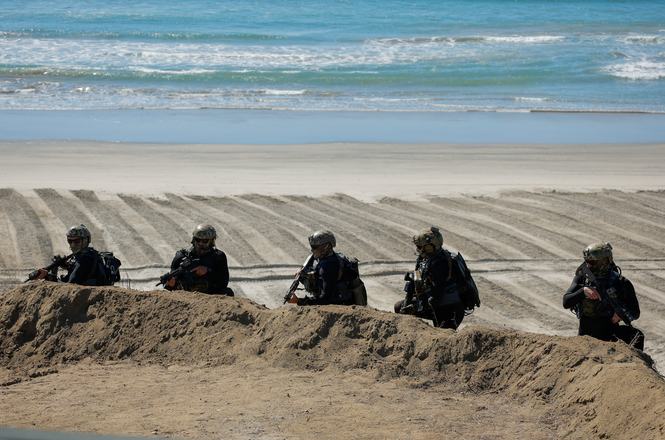
Cole and Philipps co-authored a September 2025 article, which the others contributed reporting to, revealing details of a botched 2019 Navy SEAL Team 6 operation near the North Korean coastline in which several unarmed North Koreans were killed.
According to court filings, the government’s order required LinkedIn to produce records about every message and connection invitation sent or received by the targeted accounts, including information identifying the sender, recipient, date and time. The Times reported that the DOJ sought such records from an 18-month period.
The government also obtained a nondisclosure order barring LinkedIn from revealing the request to the targeted individuals for a year. The social media network filed a motion to quash or narrow the records request and to allow disclosure to a single attorney for the Times, but a magistrate judge and a district judge both ruled against it.
LinkedIn filed an appeal on June 8, 2026, arguing that as the service provider — particularly when the targeted individual is unaware of the records request — it is entitled to argue on behalf of its users for their privacy rights.
“It should not be routine for the government to rely on secret evidence to suppress speech,” a subsequent filing argued. “None of this should be routine, because none of this is lawful, under the Constitution or the Stored Communications Act.”
In a brief in support of LinkedIn, tech and social media companies Amazon, Apple, Google, Meta and X wrote that the appellate court’s decision stood poised to “affect every provider governed by the SCA and the users of their services.”
“This case stands to affect the extent to which the users of online services, which the Supreme Court has repeatedly recognized are indispensable to modern life,” they wrote, “can continue to rely on the SCA’s assurance that the government cannot compel providers to disclose their data unless it demonstrates that the data is relevant and material to its investigation.”
A three-judge panel for the Court of Appeals for the Fourth Circuit unanimously ruled that the lower court erred in refusing to narrow the order. Judge J. Harvie Wilkinson III wrote in the decision that the reporters had worked on almost 1,000 articles on a range of issues during the targeted period and investigated unknown others, the sources for which could be revealed by the records demand.
“A request by the government to scoop up reporters’ records wholesale and ascertain the identity of their sources would tip the balance against informed discourse in a manner inimical to democratic health,” Wilkinson wrote. “It is important not to view the value of a free press in isolation. Press freedom is among those things viewed by autocrats worldwide as a threat to their grip on power.”
The appellate court sent the case back to the lower court for narrowing.
The DOJ has also attempted to identify the source or sources for the story by demanding Cole’s cellphone records from AT&T, and calling on him to testify and turn over two years’ worth of notes. The leak investigation remains ongoing.
The U.S. Press Freedom Tracker catalogs press freedom violations in the United States. Email tips to [email protected].