Incident details
- Updated on
- Date of incident
- July 10, 2026
- Legal orders
-
-
subpoena
for
testimony about confidential source
- July 10, 2026: Pending
- July 15, 2026: Objected to
- July 23, 2026: Dropped
-
subpoena
for
testimony about confidential source
- Legal order target
- Journalist
- Legal order venue
- Federal
Subpoena/Legal Order
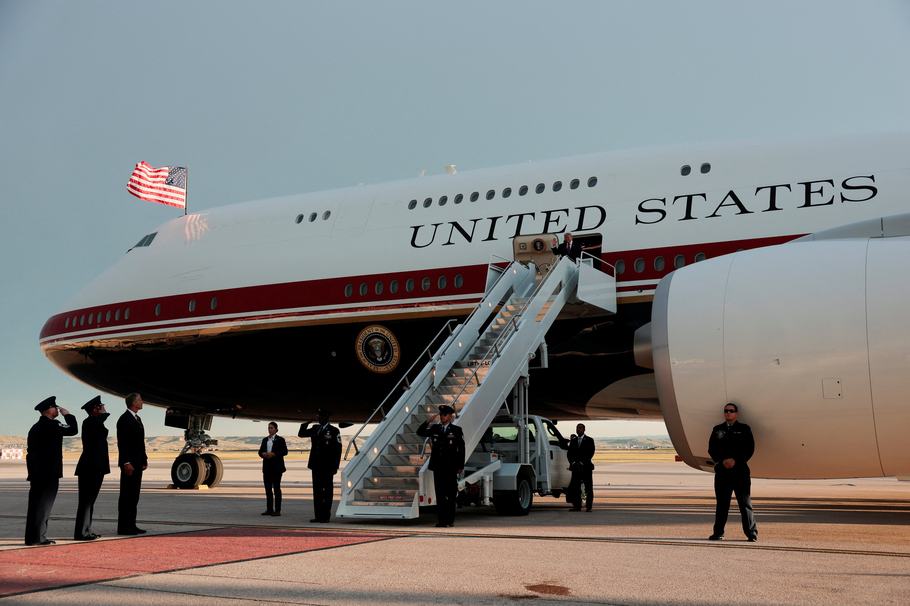
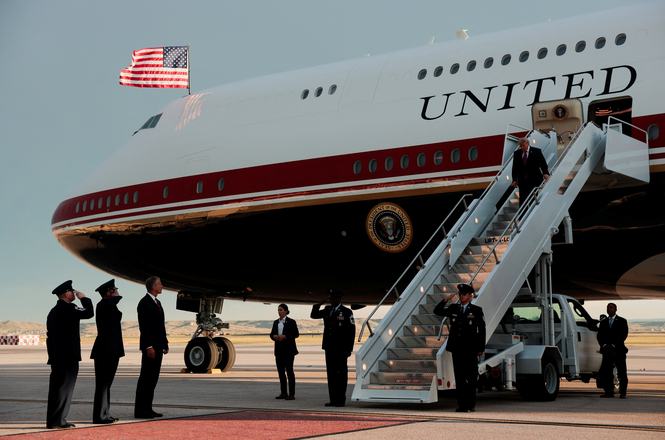
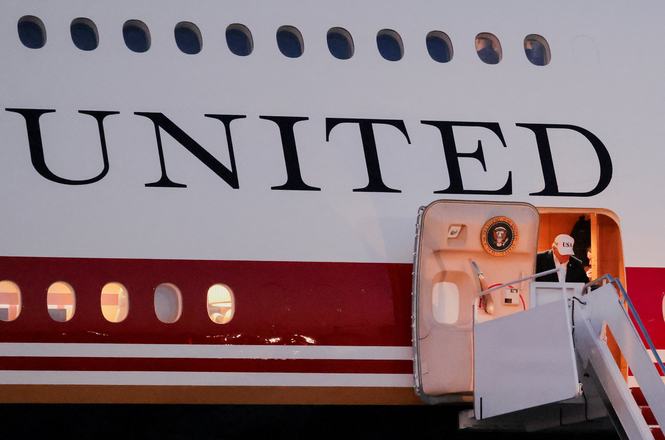
President Donald Trump deboards the new Air Force One, a plane gifted by Qatar, in South Dakota on July 3, 2026. Multiple New York Times reporters were subpoenaed July 10 by the Justice Department after reporting on safety concerns with the aircraft.
DOJ withdraws subpoenas for NY Times reporter's records
The Department of Justice on July 23, 2026, withdrew subpoenas that would have compelled multiple New York Times reporters, including intelligence and security reporter Julian E. Barnes, to testify before a grand jury about their confidential sources.
The subpoenas, served July 10, were issued as part of a harried leak investigation overseen by FBI Director Kash Patel and White House chief of staff Susie Wiles.
The inquiry sought to unmask the sources behind reporting on security concerns with President Donald Trump’s new Qatari-donated Air Force One. Investigators utilized not only subpoenas to the journalists but also numerous requests to phone providers for the reporters’ call and text logs, as well as demands to search the phones of officials at the White House.
They also unsuccessfully attempted to serve subpoenas to Times reporters Tyler Pager and Adam Goldman.
The newspaper filed a motion to strike down the testimony requests July 15, amending it to include the third-party subpoenas once it learned of them days later.
The Associated Press reported that during a July 23 hearing on the motion, U.S. District Judge Arun Subramanian criticized the government for sloppy legal work and issued a stern reprimand.
“Subpoenas are the last step. Not the first step, but the last step,” he said. “When you see something like this, if this were a civil proceeding, what I would normally do is ask the parties to show causes why sanctions should not be issued.”
According to Bloomberg Law, Subramanian rejected the DOJ’s request to suspend the subpoenas for two weeks instead of blocking them.
Sean Buckley, the chief counsel to U.S. Attorney Jay Clayton — who issued the subpoenas — told the judge, “The government is prepared to unilaterally withdraw the subpoenas at this time.”
According to Bloomberg, the legal orders could still be reissued after additional investigative steps are completed.
In a statement to the U.S. Press Freedom Tracker, Times Deputy General Counsel David McCraw said, “Today’s proceeding was an important affirmation of our country’s commitment to a free press.
“We are pleased that the government finally conceded that the subpoenas violated the law, but they should never have been issued in the first place,” McCraw wrote. “The Times and our journalists will continue to report and seek the truth without fear or favor. We will not be deterred in the face of tactics like these.”
The Department of Justice did not immediately respond to a request for comment.
NY Times asks court to strike down DOJ subpoenas
The New York Times filed a motion on July 15, 2026, to quash the subpoenas issued to several of its reporters — including intelligence and security reporter Julian E. Barnes — by a U.S. district attorney days prior.
The Justice Department subpoenas seek testimony concerning “an alleged violation of federal criminal law,” likely in reference to the anonymous sources cited in the journalists’ recent articles disclosing security concerns with President Donald Trump’s new Qatari-donated Air Force One.
In a statement shared with the U.S. Press Freedom Tracker, the Times’ top newsroom lawyer called the subpoenas “abusive and improper.”
“As we set out in our motion, these subpoenas are brought in bad faith to punish The Times for its coverage. They violate the constitutional rights of The Times and its journalists,” wrote David McCraw, the outlet’s senior vice president and deputy general counsel. “We are going to court to defend our journalists’ rights to report freely on the administration and to provide the public with stories that matter.”
The motion was filed under seal, in compliance with a court order, but McCraw wrote that the Times believes the filings should be public and is seeking to have them unsealed.
That same day, acting Attorney General Todd Blanche said during his Senate confirmation hearing that he had authorized the subpoenas.
“We’re not targeting reporters — they’re material witnesses,” Blanche said. “Just like a reporter would be a material witness to a car crash.”
Times Executive Editor Joseph Kahn, however, described the legal orders as a “naked attempt to intimidate” the journalists and the newspaper as a whole.
“We’re going to continue to report both about Air Force One and on the circumstances around the government use of prosecutorial power to intimidate the independent news media,” Kahn said in a video published by the outlet. “I’ve been a foreign correspondent in China, and I’ve seen the way an authoritarian government can keep journalists from reporting on a huge amount of news and information that’s very clearly in the public interest.
“It’s really essential to American democracy that that kind of erosion of press freedoms not happen here.”
Julian E. Barnes, an intelligence and security reporter for The New York Times, was subpoenaed by the U.S. Department of Justice on July 10, 2026, ordering him to appear in a New York City courtroom five days later.
The Times reported that Barnes was one of several of its reporters subpoenaed that day.
The journalists had reported days prior that, after taking his new Qatari-donated Air Force One on its maiden voyage, President Donald Trump reverted to the former plane at the urging of the Secret Service. Subsequent reporting revealed that the new plane was not outfitted with the same defensive countermeasures.
Both articles cited sources who only agreed to discuss sensitive security issues on the condition of anonymity.
The Times reported that, prior to the first article publishing, a senior FBI official asked the newspaper to hold it, citing national security but declining to elaborate on the nature of the security issue. The official also asked the Times to identify its sources for the article; the newspaper refused.
FBI Director Kash Patel was tapped to oversee a leak investigation into the Times’ reporting, the newspaper reported. In a major departure from precedent, Patel ran his investigation from the White House and briefed senior administration officials.
In an affidavit unsealed July 20, Barnes said two FBI agents, dressed in FBI apparel, served him the subpoena at his home shortly before 8:30 p.m.
The subpoenas, issued by U.S. Attorney for the Southern District of New York Jay Clayton, were vague, according to the Times, only compelling testimony “in regard to an alleged violation of federal criminal law.”
Clayton was nominated by Trump on June 11 to serve as director of national intelligence.
In a statement shared with the U.S. Press Freedom Tracker, the Times denounced the subpoenas and the federal government’s decision to serve some of the reporters at their homes.
“The appearance of federal law enforcement agents on the doorstep of news reporters should shock the conscience of any American who believes in the Constitution and the press freedom it protects,” wrote David McCraw, the Times’s top newsroom lawyer.
“Our journalists report the facts and advance the American public’s right to know how their government is operating and their taxpayer dollars are being used,” McCraw continued. “This brazen act should be seen as nothing more than an attempt to prevent the public from knowing what is happening in their country by intimidating journalists from doing their jobs.”
A Justice Department spokesperson told the Times that “reporters are not the targets, those leaking classified information are.”
“We value and appreciate the important role that the press plays in this country, but D.O.J. also plays an important role to make sure that the people entrusted with our nation’s secrets do what they’re supposed to do with that information,” said spokesperson Emily Covington. “We recognize there may always be natural tension there, but we are not going to ignore the law.”
In an email sent to Times staff, and shared with the Tracker, Executive Editor Joseph Kahn called the subpoenas impulsive, and a naked attempt to intimidate the newspaper and its reporters, as well as the media as a whole. He added that the Times will “mount a full defense of our staff.”
“We expect to prevail. We have the best legal team in the business,” he wrote. “The law protects news gatherers from this sort of retaliatory abuse of prosecutorial power. It is essential that the courts reaffirm that protection and quash this overreach. We are confident they will in this case.”
An additional Times reporter, London-based Adam Goldman, is also expected to receive a subpoena in connection with the leak investigation, according to Kahn’s email.
Update: This article has been revised to include details from court filings reviewed by the U.S. Press Freedom Tracker.
The U.S. Press Freedom Tracker catalogs press freedom violations in the United States. Email tips to [email protected].