Incident details
- Date of incident
- January 11, 2026
- Location
- Fort Snelling, Minnesota
- Targets
- Jon Farina (Status Coup)
- Assailant
- Law enforcement
- Was the journalist targeted?
- No
Assault
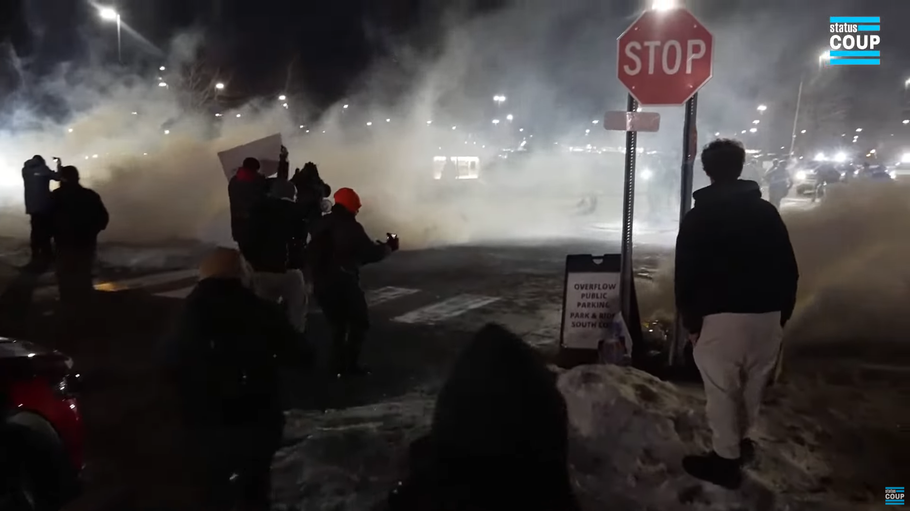
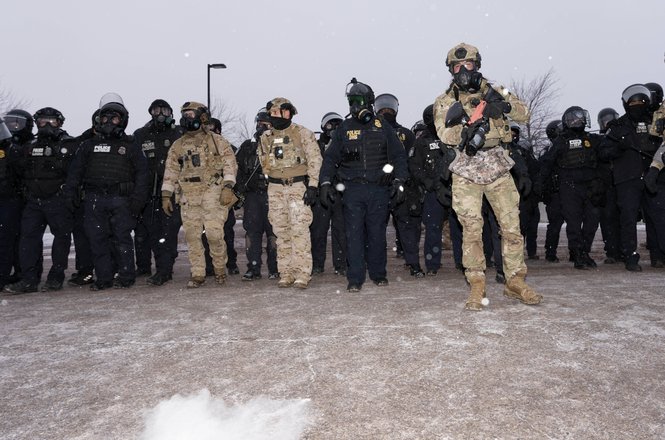
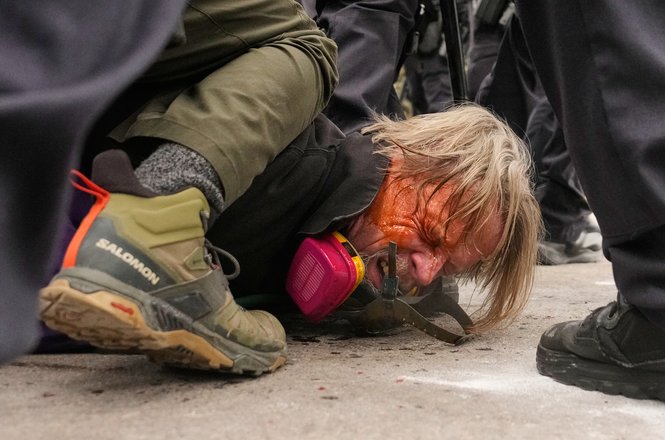
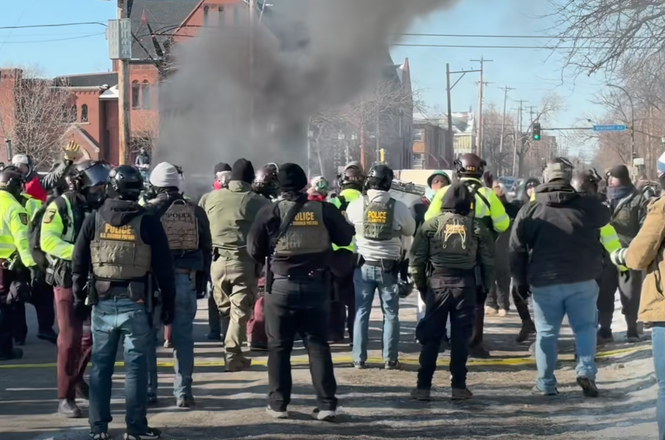
Status Coup photojournalist Jon Farina filmed the scene above as federal agents deployed tear gas at protesters outside the Whipple Federal Building in Fort Snelling, Minnesota, on Jan. 11, 2026. Moments later, he was struck with a crowd-control munition.
Photojournalist Jon Farina was shot with a crowd-control munition by Department of Homeland Security agents while reporting on immigration-related protests outside a federal building in the Minneapolis suburb of Fort Snelling, Minnesota, on Jan. 11, 2026.
The Bishop Henry Whipple Federal Building has been a focal point of protests for its use as a base for the federal immigration crackdown in the Twin Cities area. Demonstrations escalated after an Immigration and Customs Enforcement officer fatally shot Renee Good Jan. 7 while officers were conducting a raid in Minneapolis.
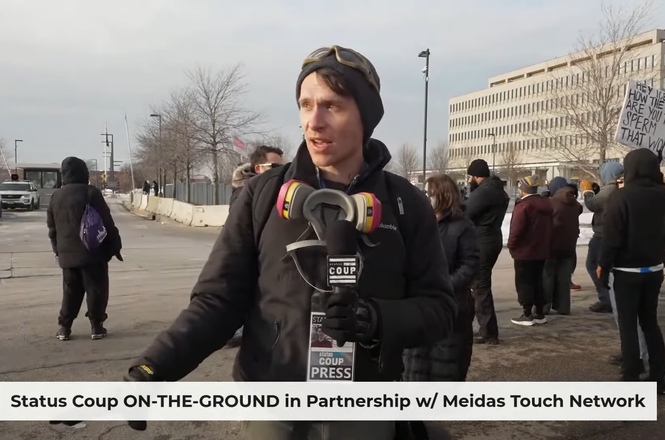
Farina and reporter JT Cestkowski were reporting for the news outlet Status Coup, livestreaming as protesters gathered outside the facility following reports that federal officers had deployed tear gas.
Cestkowski told the U.S. Press Freedom Tracker that things were calm when they first arrived.
“But agents were sort of in this pattern of, every 30-45 minutes or so, they would come out into the crowd and deploy tear gas, flash bangs, pepper balls, pepper spray,” he said.
Several hours into their reporting, the journalists were interviewing a demonstrator who had been detained for seven hours in the Whipple building and had just been released. They were across the street, where agents had directed the crowd to stand.
“We were hearing her story when the agent started firing off flash-bang grenades and tear gas canisters and the like,” Cestkowski said.
Shortly after, in the livestream footage, Farina is heard telling Cestkowski, “I got hit with something, my leg is hurting.”
Cestkowski told the Tracker that, at the time, they believed Farina had been struck by a stun grenade. Afterward, Farina said he thought it was more likely to have been a pepper ball, based on the size of the red welt it left.
Approximately two minutes later, while Cestkowski was interviewing a 16-year-old demonstrator, federal officers launched a second volley at the crowd and the reporter was shot with pepper balls in the buttocks and back of his arm. Cestkowski told the Tracker that he did not suffer any injury or bruising as a result, crediting his thick winter clothing layers.
Cestkowski said that throughout the day, both he and Farina were also repeatedly caught in the clouds of tear gas and impacted by the deployment of stun grenades.
“No distinction was made between press and protesters,” he added. “Those weapons aren’t precise. And certainly in the way they were used that night, there was no precision as to who they were targeting. They were just blanket firing into the whole crowd.”
In the livestream footage of the news crew’s coverage, Cestkowski can be seen wearing large press credentials around his neck and carrying a mic bearing the Status Coup logo. Farina was also wearing credentials and was carrying a professional camera.
Cestkowski said they left the protest shortly after because they were both “fried.”
“When you go running away from that stuff, you don’t need to run very far, but it feels like the longest sprint of your life because you’re not only worried about being in the line of fire or taking the stuff in,” he said. “You have to be aware of your surroundings — I’m trying to look out for Jon, Jon’s trying to look out for me — and just keeping yourself safe. It’s very mentally and physically taxing to go through that.”
Neither DHS nor ICE responded to requests for comment or additional information about the protest response that day. In a statement released Jan. 12, Department of Homeland Security Assistant Secretary Tricia McLaughlin defended the agency’s presence in Minnesota but did not address the reported use of munitions against journalists.
Both the city of Minneapolis and the state have since sued the Trump administration, arguing the unprecedented deployment of federal agents violates constitutional rights.
The U.S. Press Freedom Tracker catalogs press freedom violations in the United States. Email tips to [email protected].