Incident details
- Updated on
- Date of incident
- September 19, 2026
- Location
- Washington, District of Columbia
- Targets
- CNN, MSNBC/MS NOW, Politico
- Case number
- 1:26-cv-03287
- Case status
- Ongoing
- Type of case
- Civil
- Government agency or public official involved
- Type of denial
- Press credential or media list
Denial of Access
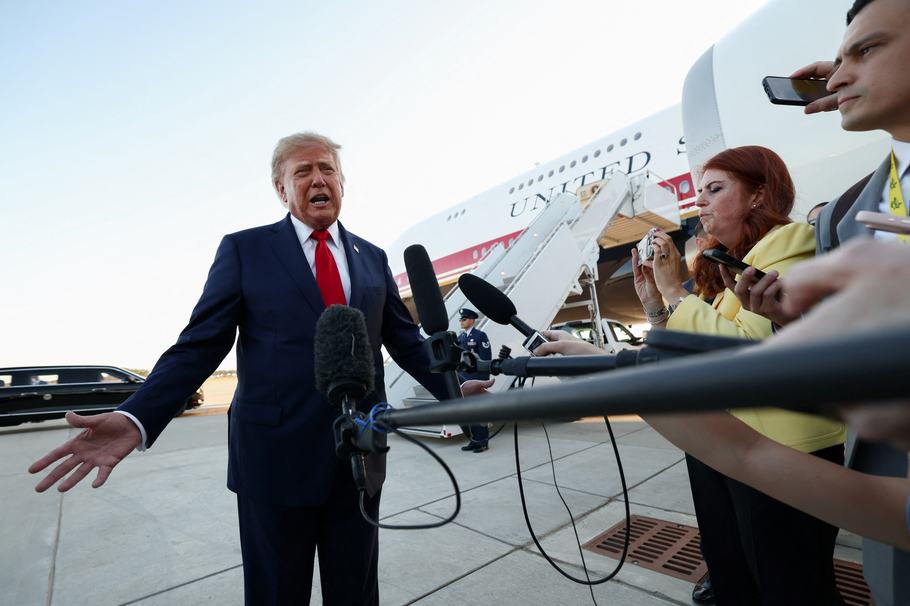
President Donald Trump speaks to members of the press in Charlotte, North Carolina, on Sept. 16, 2026. Two days later, he announced a ban on three news outlets reporting from the White House, and they were barred on Sept. 19.
Banned outlets back in White House after initial denials
Reporters from CNN, Politico and MS NOW regained access to the White House midday on Sept. 24, 2026, after being repeatedly denied entry to the complex throughout the morning. The back-and-forth followed an overnight ruling by a federal judge temporarily setting aside an administration ban and restoring access for the outlets.
The initial denials prompted the news operations to request an emergency hearing for noncompliance. District Judge Timothy J. Kelly told the White House that it had until 12:30 p.m. to respond.
Starting around noon, media reports stated that the journalists were once again allowed into the White House complex and had resumed their reporting duties.
In an on-air broadcast, CNN White House correspondent Betsy Klein said, “Very happy to be getting back to work here.” Similarly, MS NOW reporter Laura Barrón-López said on air, “I was just allowed back into the White House through the northwest gate.”
Attorneys for the administration, in a declaration submitted to the court, laid out the timeline leading to this morning’s reinstated access, and stated the confiscated press credentials were available for pickup at 9:55 a.m. However, media reports indicated that journalists were still being denied after 11 a.m.
CNN reported that White House staff were unsure how to respond to the overnight ruling, possibly leading to confusion that caused the reporters’ continued lack of access. An unnamed White House official said, “It’s chaotic, no idea,” when asked about plans to reinstate access.
The morning’s disarray occurred amid a high-profile state visit from Chinese President Xi Jinping to the White House, which the network TV pool members had refused to broadcast, in solidarity with the banned outlets.
Later that evening, two CNN journalists and an MS NOW reporter were denied entry at the arrival ceremony for a state dinner for Xi. According to CNN, the White House allowed in only its photojournalist and audio technician, excluding its reporter and producer, even though reporters and producers from other television networks were permitted at the event.
By Sept. 25, however, TV pool coverage was set to resume, reported The New York Times, ending an effective boycott by the five networks that share responsibility for TV coverage of the president.
The judge informed the outlets that they had until Sept. 28 to file for a preliminary injunction of the ban and would set a hearing date in early October to further adjudicate the matter.
Correction and update: This report has been revised to reflect a Sept. 28 filing date for a preliminary injunction, rather than Sept. 26. The story has also been updated to reflect subsequent developments regarding ongoing access issues, as well as the resumption of the TV pool.
Judge restores White House access to banned outlets; Trump defies order
CNN, Politico and MS NOW remain barred from the White House on Sept. 24, 2026, despite an overnight ruling by a federal judge in Washington, D.C., temporarily restoring access to the complex after a Trump administration ban.
Journalists from the outlets were first refused entry to the White House on Sept. 19 after President Donald Trump announced the ban on Truth Social the day prior.
The outlets sued on Sept. 21, saying that the ban was a violation of the First Amendment’s protections against retaliatory government actions and viewpoint discrimination.
In Sept. 22 filings opposing the restraining order, the administration characterized press access to White House as a “privilege—not a right,” an argument its attorney reiterated at an emergency hearing before the district court on Sept. 23.
In defense of the ban, the administration also asserted that the outlets had violated standards of conduct and published stories that threatened national security.
“The President concluded that they have failed to maintain basic minimum ‘standards of professionalism and decorum expected of those given access to the White House Complex, including’ by ‘publishing sensitive or classified information,’” attorneys wrote in its filing.
The administration also submitted to the court letters sent to each of the outlets on Sept. 22 formally informing them of their revoked credentials and listing published articles that the administration had perceived as having “threatened national security and/or spread falsehoods.”
These included articles on the war in Iran, such as CNN’s reporting on low munition stockpiles; administration affairs, such as an MS NOW article on a leak investigation; and campaign events, such as a Politico story on the recent GOP midterm convention in Dallas.
The letters also informed the outlets that they had until Sept. 25 to appeal the revocations.
At a Sept. 23 hearing, the lawyer representing the outlets, Theodore J. Boutrous, called the ban “unprecedented, unreasonable and severe punishment” and focused his arguments on a lack of due process in the rollout of the ban.
Administration attorney Michael Velchik stressed the president’s right to take “immediate action to defend national security” and argued that the outlets had in fact been offered due process by the post-action letters giving them a Sept. 25 deadline to answer.
But in his Sept. 24 ruling granting the temporary restraining order, District Judge Timothy J. Kelly wrote that the outlets were likely to succeed in their suit and emphasized that circumstances were not “so extraordinary” that national security concerns could trump due process.
The temporary restraining order is set to expire in 14 days, but meanwhile requires the administration to restore press credentials for the affected outlets.
Boutrous celebrated the order, telling CNN: “This is a strong ruling vindicating freedom of the press, due process and the rule of law. We greatly appreciate the court’s swift action.”
However, Politico reported that one of its reporters was refused entry to the White House on the morning of the ruling and that his press credentials were confiscated.
CNN and MS NOW also reported that some of their reporters were not allowed access to the complex, according to The Guardian. It was not immediately clear why the reporters had been denied entry.
Seth Stern, chief of advocacy at Freedom of the Press Foundation, of which the U.S. Press Freedom Tracker is a project, condemned the continued barring of the reporters.
“The administration was rightly given the back of the hand by Judge Kelly for claiming routine reports harm ‘national security,’ but court orders are just paper unless they’re enforced. Enough is enough. Government officials who continue to deny journalists’ access to the White House in defiance of Kelly’s order should be held in contempt,” he said in a statement.
The White House did not immediately respond to a request for comment.
Reporters from CNN, Politico and MS NOW were denied access to the White House in Washington, D.C., on Sept. 19, 2026, following the announcement of a ban by President Donald Trump a day earlier. The outlets subsequently filed a First Amendment legal challenge to the ban.
Trump said on Truth Social on Sept. 18 that he was barring the outlets from the White House as “a result of their constant ‘reporting’ FAKE NEWS!” The announcement was met with widespread criticism by press freedom advocates and others.
Then, on the morning of Sept. 19, the press badges of journalists from the three outlets were deactivated and confiscated by security personnel as they attempted to enter the White House grounds.
In an interview, MS NOW’s White House correspondent Akayla Gardner said that her badge had been disabled at a checkpoint inside the complex and a security officer then asked her to hand it over, saying that “it was above his head” when asked to explain why.
Gardner added that an MS NOW photographer was also denied access, but that a producer for the network was allowed entry.
CNN reporter Betsy Klein reported a similar experience. When she tried to enter the White House, she was informed by a security officer that her badge had been deactivated and was referred to the White House press office for more information.
Politico reporter Cheyenne Haslett was also denied entry and had her badge taken, according to an internal email by Politico’s Global Editor-in-Chief Jonathan Greenberger published shortly afterward. He added that Politico “will vigorously defend our First Amendment rights.”
The three outlets condemned the denials of access in Sept. 19 statements and indicated that they would fight the ban.
“CNN’s mission to report on the U.S. government will continue regardless of any attempts to restrict physical access to the White House and other government buildings, or any other attempts to impede our journalism,” CNN said in a statement.
MS NOW said that it intended “to take any and all steps necessary to defend our First Amendment rights and the essential role of independent journalism in our democracy.”
The White House Correspondents’ Association’s president, Jacqui Heinrich, said on the social platform X, “Today’s action revoking access for journalists from CNN, POLITICO, and MSNOW violates the First Amendment.”
“The American people, through a free and independent press, must be able to scrutinize those elected to power, regardless of whether government officials view it favorably,” she added.
Previous attempts to deny individual journalists’ access to the White House by Trump have been overturned in court, including for CNN reporter Jim Acosta, whose 2018 suspension was reversed after a federal judge ordered a temporary reinstatement of his press badge.
The affected outlets announced a suit opposing the ban Sept. 21. In a joint statement saying that they had notified the administration of an imminent filing, the outlets characterized the ban as an assault on press freedom.
“Without notice or process, the White House revoked our journalists’ credentials because it objected to our reporting. Left unchallenged, this threatens press freedom and the public’s right to independent journalism free from government interference,” they said.
The complaint itself asks the judge to immediately block the ban and reinstate credentials for the affected outlets.
Meanwhile, CNN, as part of its duties in the White House pool that rotates responsibility for TV coverage with other networks, was scheduled to take on TV coverage of the president Sept. 21.
However, the network was removed from the assignment by the White House, prompting the rest of the pool to announce that it would suspend its TV pool reporting in solidarity.
Bryan Boughton, the Washington bureau chief at Fox News and acting chair of the television pool consortium, wrote to the other stations in a note obtained by The New York Times: “Effective today, the TV pool will not be covering events designated as pool coverage of the President. There will be no replacement pool put in place.”
The TV pool, which includes NBC, ABC, CBS, Fox and CNN, released a joint statement, saying, “The public has a vital interest in receiving accurate, independent information about its government. No administration should restrict a news organization because it objects to its reporting.”
Trump returned to Truth Social on Sept. 21 to defend the ban. “The White House is not instituting an assault on the Free Press, something which I cherish. It is instituting an assault on the FAKE NEWS, something that has grown like Cancer in our beloved United States of America,” he wrote.
Seth Stern, chief of advocacy at Freedom of the Press Foundation, of which the U.S. Press Freedom Tracker is a project, condemned the ban in a statement, saying, “It’s difficult to imagine a more blatant violation of the First Amendment than Trump banning news outlets from the People’s House for criticizing the government.”
Bruce Brown, president of the Reporters Committee for Freedom of the Press, echoed Stern’s concerns, adding: “The First Amendment is clear that once the White House invites in some journalists, it can’t ban others because it doesn’t like their reporting. This is textbook viewpoint discrimination and will be quickly struck down by the courts if challenged.”
The U.S. Press Freedom Tracker catalogs press freedom violations in the United States. Email tips to [email protected].