Incident details
- Date of incident
- October 21, 2025
- Location
- College Park, Maryland
- Arrest status
- Detained and released without being processed
- Arresting authority
- University of Maryland Police Department
- Unnecessary use of force?
- No
Arrest/Criminal Charge
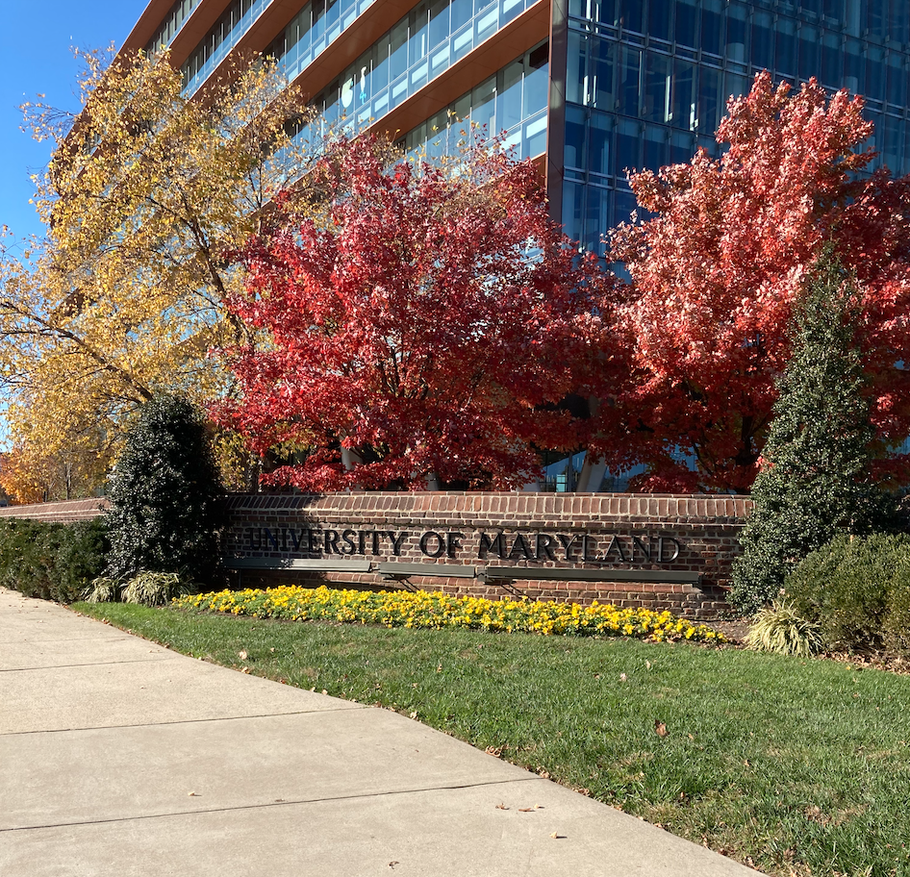
An entrance to the University of Maryland in College Park. Two student journalists were detained on campus while covering an Oct. 21, 2025, pro-Palestinian protest. Licensed under Creative Commons Attribution-Share Alike 4.0 International.
Riona Sheikh, editor-in-chief of Al-Hikmah, the University of Maryland’s independent Muslim student newspaper, was detained on Oct. 21, 2025, while covering a protest outside an event that featured speakers from the Israeli military on the school’s campus in College Park.
The event, hosted by a pro-Israel student group, took place inside the university’s Jiménez Hall and featured Israel Defense Forces soldiers speaking about their experiences during the war in Gaza, according to Sheikh and The Diamondback, another student newspaper at the university that covered the event.
Sheikh told the U.S. Press Freedom Tracker that she and Al-Hikmah colleague Rumaysa Drissi were initially covering a protest held outside the building by a pro-Palestinian group.
She said that before the soldiers’ event began, she had asked a university police officer if she could sit in, identifying herself as a journalist. She was denied access.
Later, a small group of protesters entered Jiménez Hall, and began chanting and holding signs outside the classroom where the evening event was taking place.
Sheikh said she and Drissi followed the group into the building, but stayed apart from the protesters. She added that she was recording on her cellphone, and Drissi was holding a professional camera.
Two or three University of Maryland police officers were standing in front of the classroom door. Once more officers arrived at the scene, Sheikh said they surrounded her and two protesters.
She identified herself as a journalist and said she was covering the event; the protesters said they did not know her, she added. The officers replied that it did not matter that she was a journalist, alleging that she was disrupting the event, Sheikh said. She attempted to leave, but they blocked her path.
Drissi then approached the group that was detained and explained to the officers that she and Sheikh were reporters covering the story, Sheikh said. The officers surrounded her as well, and alleged that they came as a group with the protesters.
“They never asked me for press credentials, but I did ask them if they wanted to speak to my editor, and they said ‘no,’” Sheikh said.
Sheikh added that the officers asked her and Drissi for their student identifications so they could obtain their ID numbers to report them to the Office of Student Conduct. They declined to provide the IDs because they felt they were “wrongfully detained,” she said.
The two journalists were released after around an hour.
According to a letter sent to the university by the Foundation for Individual Rights and Expression, citing video footage of the incident, Sheikh and Drissi “repeatedly” identified themselves as journalists; nevertheless, an officer accused them of screaming and being disruptive.
FIRE added that the footage “shows neither Sheikh nor Drissi shouting as they documented the interaction between protesters and university police.”
The Diamondback — citing its review of officer body camera footage obtained in a public records request, along with witness videos and videos from staff reporters — also reported that Sheikh and Drissi were “holding cameras and standing behind protesters who chanted and held signs,” and not participating.
The paper also noted that its own reporters, who were wearing credentials around their necks, covered the incident and were not asked to leave.
FIRE wrote that Sheikh and Drissi were informed Nov. 17 by a university official that they faced charges for violating the code of student conduct, including interfering with the lawful freedom of expression of others, and participating in disorderly or disruptive action.
The group urged the university to drop the charges, which would “sanction Sheikh and Drissi for exercising their rights as members of the student press to document newsworthy events on campus.”
Christopher Lord, the university’s associate general counsel, in a Dec. 18 response to FIRE, said Sheikh and Drissi were facing charges “because evidence indicates that they may have been part of the active disruption” of the event.
He added that Sheikh and Drissi were “not entitled to special treatment just because they claimed to be student journalists,” and noted that the outcome of their disciplinary conferences was pending.
Lt. Rosanne Hoaas, public information officer for the University of Maryland Police Department, told the Tracker that officers “stopped four people for their failure to obey a command from law enforcement and for disrupting a university-sanctioned event,” adding that the students were required to provide identification to police.
She also noted that of the “group of six people” who approached the room where the event occurred, none displayed media credentials.
Sheikh said the incident left Al-Hikmah’s staff more hesitant amid an already fearful climate, especially for reporters and photographers who wear a hijab.
“The whole reason I was covering it was because already a lot of Muslims are afraid to go and cover things like this,” she said.
“But now even I am a little nervous,” Sheikh added. “Am I going to be able to cover protests without experiencing this kind of harassment from the police?”
Update: This report has been revised for clarity of quoted material.
The U.S. Press Freedom Tracker catalogs press freedom violations in the United States. Email tips to [email protected].