Incident details
- Date of incident
- March 28, 2026
- Location
- Los Angeles, California
- Arrest status
- Detained and released without being processed
- Arresting authority
- Los Angeles Police Department
- Unnecessary use of force?
- No
Arrest/Criminal Charge
- Assailant
- Law enforcement
- Was the journalist targeted?
- No
Assault
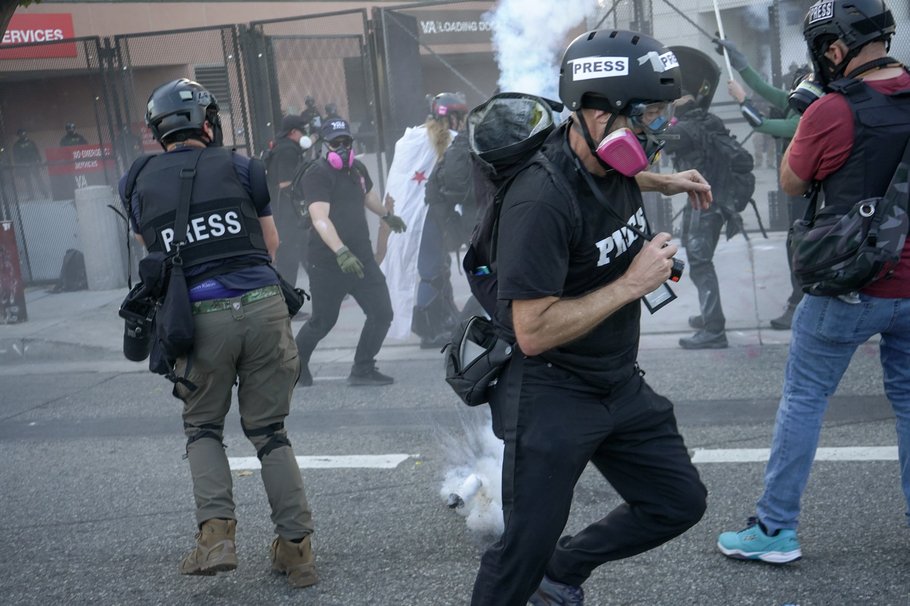
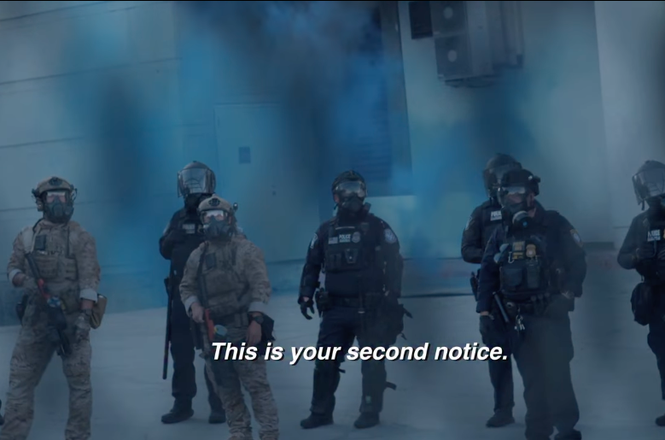
Journalists dodge a tear gas canister set off by federal agents at a demonstration in Los Angeles, California, on March 28, 2026. Later that day, independent journalist Sean Beckner-Carmitchel was kettled by police and threatened with arrest.
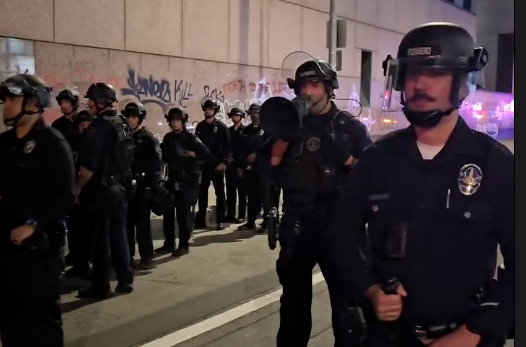
Independent journalist Sean Beckner-Carmitchel was caught up in a police kettle and threatened with arrest, after having been hit with a crowd-control munition, while covering a protest in downtown Los Angeles, California, on March 28, 2026.
LA’s “No Kings” protest was one of some 3,300 demonstrations against Trump administration policies that took place that day across the U.S., drawing more than 8 million people nationwide, organizers said.
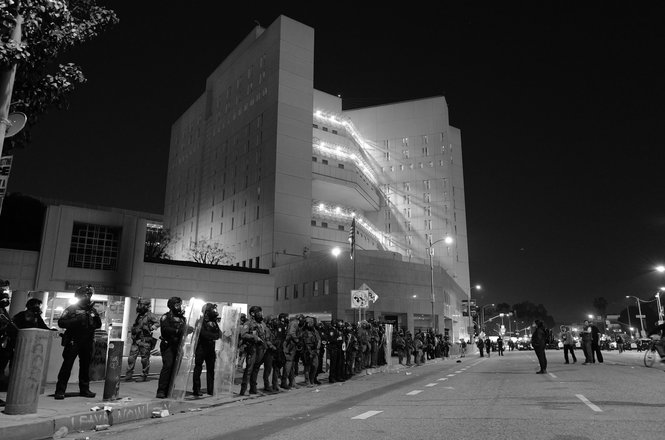
After the main protest march, people gathered outside the Metropolitan Detention Center, where immigrants are held, and the Roybal Federal Building, locations where many demonstrations have centered since sweeping immigration enforcement began in the city in June 2025. The LA Police Department said 75 people were arrested after officers issued a dispersal order and declared an unlawful assembly.
Beckner-Carmitchel told the U.S. Press Freedom Tracker that when he arrived at the detention center to cover the protest, he saw people kicking the fence and federal agents deploying chemical irritants on the crowd. He said he was affected slightly by the gas before he put his mask on.
He posted a video on Bluesky showing a federal agent tossing a canister toward members of the press outside the center’s gate.
The journalist also said he was hit in the leg by a tear gas canister but did not believe it was intentional.
“If I’m getting the gnarly shot, and I’m hit by a nondirectional, less-lethal, it is what it is, right? Obviously, I’d rather not. But let me put it this way: I would love to get to a point where that’s what I’m complaining about,” he said.
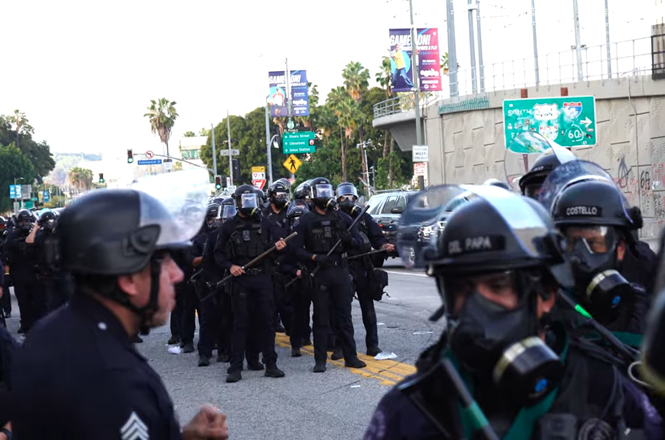
Beckner-Carmitchel said that eventually, the LAPD arrived at the scene, pushed protesters back and sealed off both ends of the street, forming a kettle — a tactic used to surround and control a crowd. They told everyone there they were under arrest.
Soon after, the police began asking if there were members of the media present, and for those who identified as press to show credentials. Beckner-Carmitchel, who was carrying a pass issued by the LA Press Club, as well as his professional Sony camera, said he raised his hand, but asked if he could stay to document.
“They kept telling me, ‘You have to leave, or you’ll get arrested.’ And I kept telling them, ‘Hey, look, I’m just trying to get a few shots. I’m off to the side. I’ll leave when it makes sense to leave.’”
He added that his movement was restricted, “and that ultimately counts as preventing me from doing my job.”
“Eventually we were able to negotiate a spot that made sense for media to be that wasn’t in the kettle itself,” he said.
Beckner-Carmitchel was one of several journalists detained in the kettle that day; some who showed media credentials were allowed to leave, while others who did not have formal credentials were held for longer.
He noted, “My biggest concern was them appearing to be determining who is and is not press, against department policy.”
A September preliminary injunction barred LAPD officers from interfering with journalists covering protests, including by arresting, detaining or citing them solely for failing to disperse, or by identifying media members solely based on whether they have a credential.
In a written statement shared April 2, LAPD Chief Jim McDonnell said that police were responding to acts of violence and vandalism and eventually issued a dispersal order. Anyone identifying as a “duly authorized” member of the media was contacted, verified and separated from those facing arrest for failure to disperse, according to the statement.
McDonnell added that any use of force or allegations of mistreatment, including those involving media members, would be investigated and addressed.
“The LAPD recognizes the media’s right to cover events and makes reasonable efforts to accommodate, with those efforts consistent with our primary duty to maintain public safety and order,” the statement said.
The U.S. Press Freedom Tracker catalogs press freedom violations in the United States. Email tips to [email protected].