Incident details
- Date of incident
- March 28, 2026
- Location
- Los Angeles, California
- Targets
- Luis Turcios (Independent)
- Arrest status
- Arrested and released
- Arresting authority
- Los Angeles Police Department
- Charges
-
-
Rioting: failure to disperse
- March 28, 2026: Charges pending
-
Rioting: failure to disperse
- Unnecessary use of force?
- Yes
Arrest/Criminal Charge
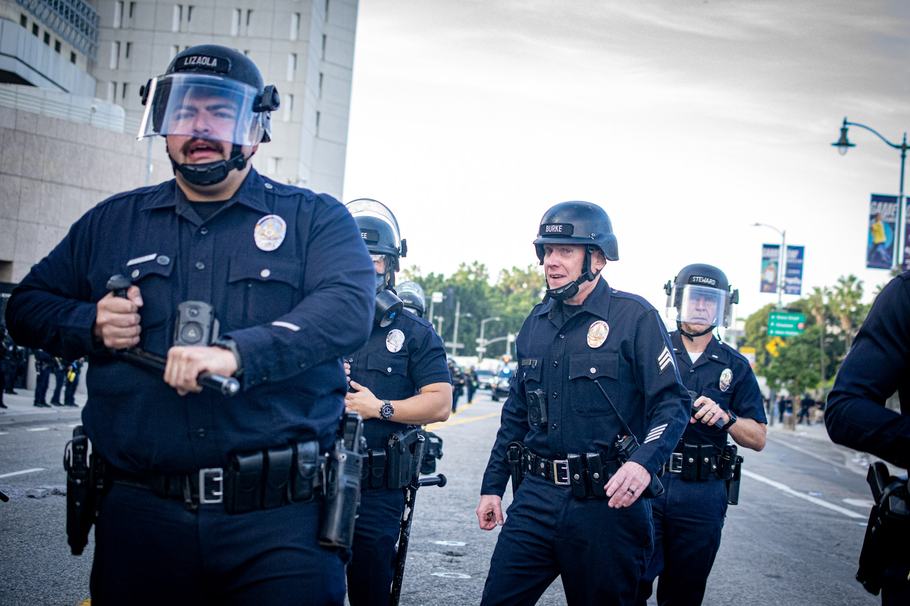
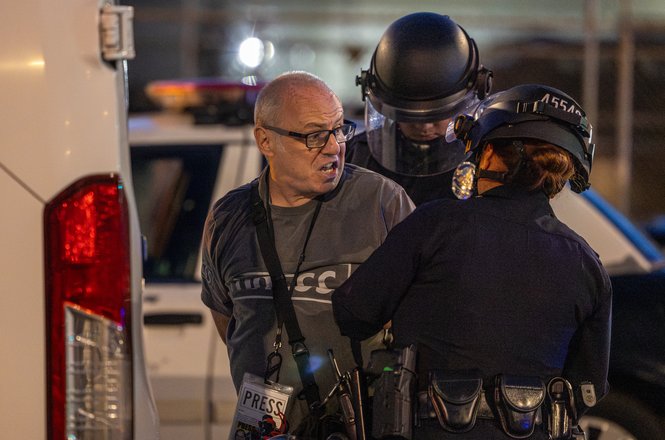
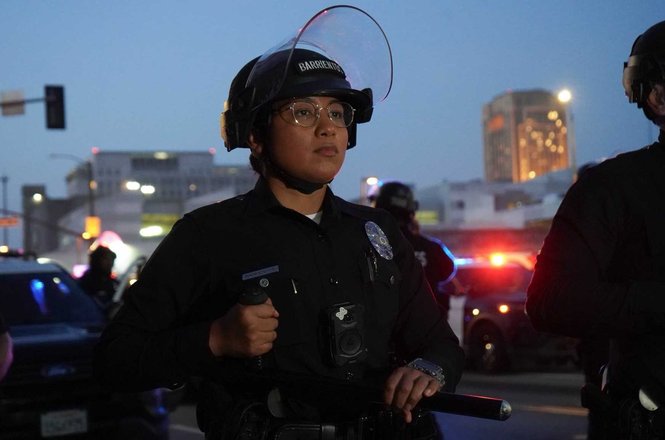
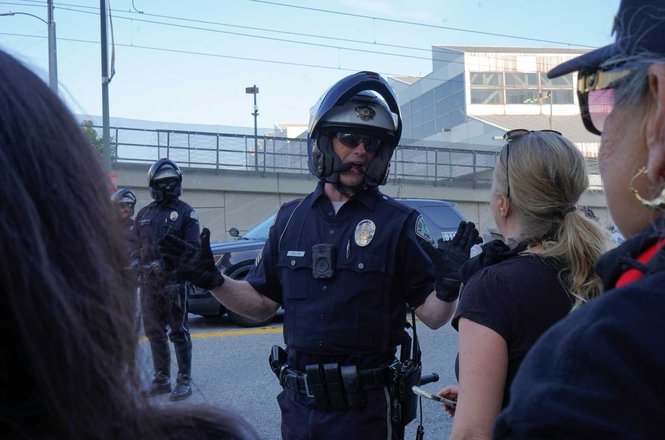
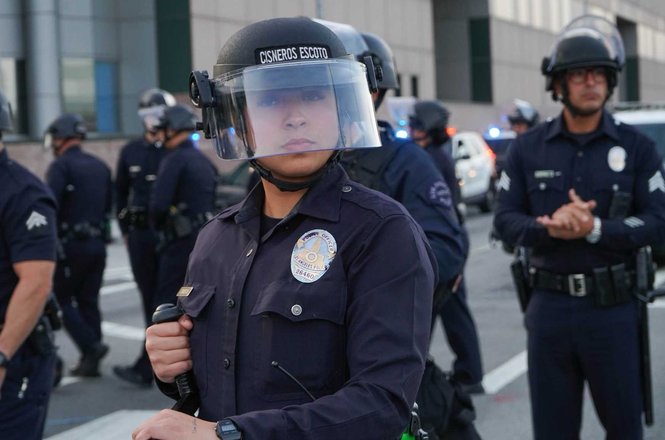
Police respond to a protest near an immigration detention center in downtown Los Angeles, California, on March 28, 2026. Independent photojournalist Luis Turcios was arrested while documenting the protest and charged with failing to disperse.
Independent photojournalist Luis Turcios was kettled by police, arrested and cited for failing to disperse while documenting a protest outside an immigration detention center in downtown Los Angeles, California, on March 28, 2026.
The protest followed LA’s “No Kings” demonstration, one of some 3,300 against Trump administration policies that took place that day across the U.S., drawing more than 8 million people nationwide, organizers said.
After the main march, people gathered outside the Metropolitan Detention Center, where immigrants are held. The location has been the focus of demonstrations since sweeping immigration enforcement began in the city in June 2025. The LA Police Department said 75 people were arrested after officers issued a dispersal order and declared an unlawful assembly.
Turcios, a photojournalist and cinematographer who documents subjects including culture, protests, and everyday street life in Los Angeles, told the U.S. Press Freedom Tracker that he had started that day covering the main, peaceful “No Kings” rally.
He went on to cover the protest in front of the detention center, which he described as a “war zone.” Turcios said some individuals at the demonstration became rowdy and violent, and federal agents responded by shooting tear gas and pepper balls into the crowd.
He said that he and another photographer, Santiago Restrepo — who was also arrested that night — were caught up in the tear gas.
Federal agents rushed out of the detention center to push the crowd back. At the same time, LAPD officers closed in on the group from both ends of the street, corralling them. Turcios said he then decided it was time to leave, but his exit route was blocked by LAPD.
More than a dozen journalists were detained in the kettle that day; some who showed media credentials were allowed to leave, while others without formal credentials were held longer. Turcios, who was carrying two cameras, did not initially tell the police that he was a journalist and remained in the kettle.
LAPD then started arresting those who remained in the kettle one by one. Turcios said that when they detained him, they put him in zip ties and confiscated his belongings, including removing his cameras, film, SD card and cellphone from his backpack.
He sustained a minor bruise from the officer’s strong grip on his arm, he said.
As the officer was taking the items out of his bag, he asked Turcios if he was a photographer, to which he replied that he was.
“Have you ever thought about getting credentials?” the officer asked. “I could have saved you from this.”
However, a September 2025 preliminary injunction states that carrying professional gear, such as photographic equipment, should be seen as an indicator someone is a working journalist, and that journalists are not required to wear credentials or be employed by a major media outlet to be considered press.
The order also bars LAPD officers from interfering with journalists covering protests, including by arresting, detaining or citing them solely for failing to disperse.
Turcios was taken to the station in a police van along with others who were being arrested. He said he was held in “uncomfortable” zip ties the whole time.
He was released around 12:30 a.m. with a citation for failing to heed an LAPD dispersal order, “despite the fact that it does not apply to journalists, and I didn’t hear it,” he said.
In a written statement shared April 2, LAPD Chief Jim McDonnell said that police were responding to acts of violence and vandalism and eventually issued a dispersal order. Anyone identifying as a “duly authorized” member of the media was contacted, verified and separated from those facing arrest for failure to disperse, according to the statement.
McDonnell added that any use of force or allegations of mistreatment, including those involving media members, would be investigated and addressed.
In late April, when Turcios appeared for his scheduled court date, he was told his case was “under review,” meaning he hadn’t yet been charged, but his case would remain open for a year.
Turcios told the Tracker that since the incident, “I’ve been more cautious and alert about which protests I go to,” and “I’ve immediately left once LAPD shows up.”
He added that he planned to get press credentials before going out to cover any other major protest, and was in the process of obtaining a National Press Photographers Association badge.
The U.S. Press Freedom Tracker catalogs press freedom violations in the United States. Email tips to [email protected].