Incident details
- Updated on
- Date of incident
- September 1, 2025
- Targets
- Hugo Rios (Freelance)
- Case number
- 3:25-cv-02170
- Case status
- Ongoing
- Type of case
- Class Action
- Assailant
- Law enforcement
- Was the journalist targeted?
- Yes
Assault
- Equipment damaged
- Actor
- Law enforcement
Equipment Damage
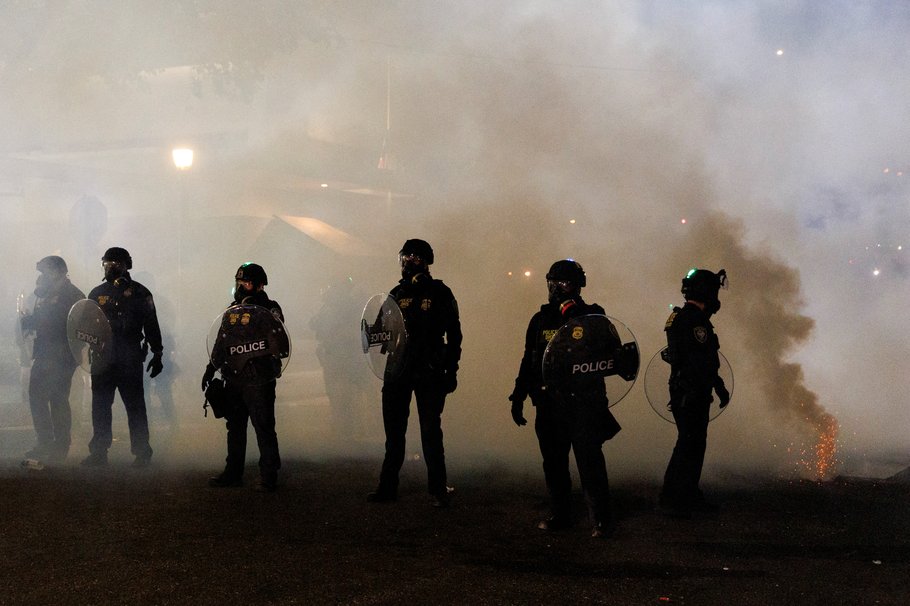
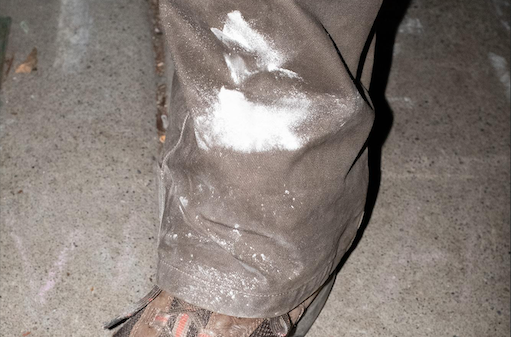
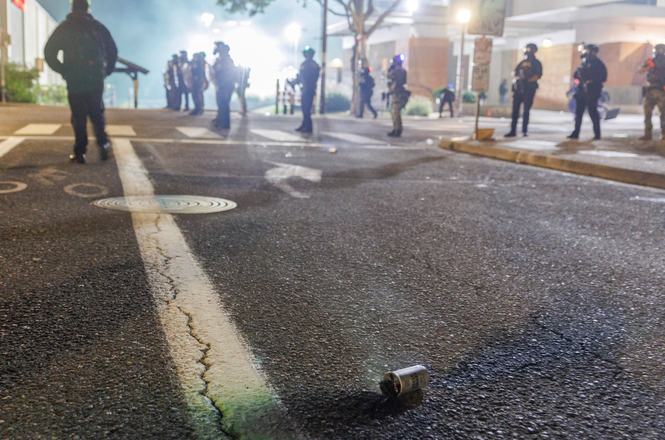
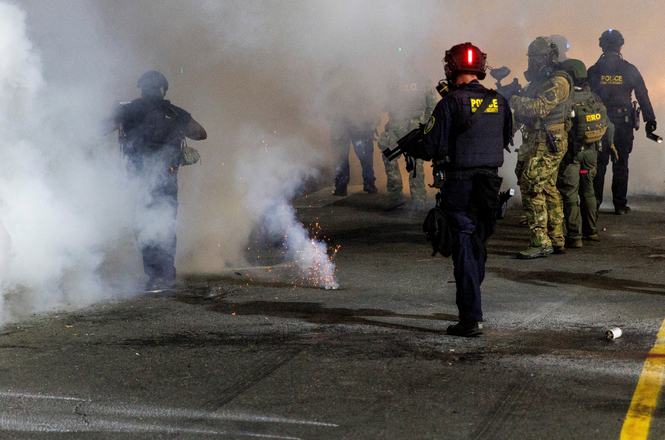
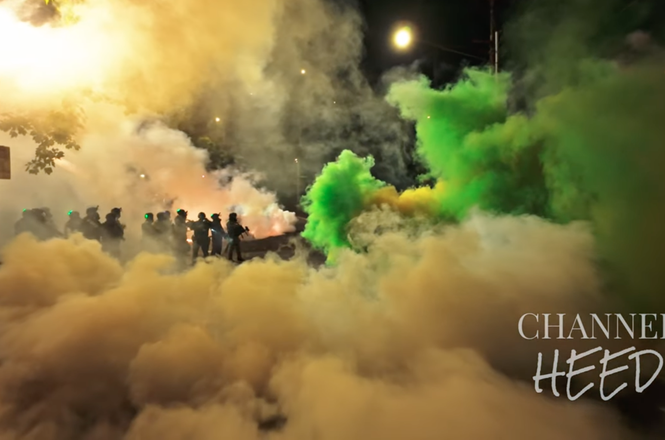
Federal agents respond to anti-deportation protests outside an ICE detention facility in Portland, Oregon, on Sept. 1, 2025. Photojournalist Hugo Rios was shoved, shot with crowd-control munitions and tear-gassed while covering the demonstration.
Appeals court suspends injunction against DHS in journalists’ suit
A federal appeals court on April 27, 2026, put on hold a preliminary injunction protecting Oregon journalists against retaliatory violence by Department of Homeland Security agents in Portland, arguing that the government had shown it was likely to succeed at getting the injunction overturned.
Oregon journalists Hugo Rios and Mason Lake had won the injunction in March in their federal suit against President Donald Trump, the Department of Homeland Security and its then-head, Kristi Noem.
The injunction forbade agents stationed at Portland’s Immigration and Customs Enforcement facility from using chemical or projectile munitions in the absence of imminent threat of physical harm, or using weapons on or firing munitions at the head, neck or torso. It also forbade agents from using pepper spray unless a targeted individual is actively resisting, or against groups of people where bystanders might be affected.
The district court also granted the plaintiffs’ request to certify a class of those who are automatically part of the legal action after having reported on DHS activities or nonviolently protested at the Portland ICE building.
The government immediately appealed the injunction, as well as the class certification, and asked for the injunction to be put on hold while the appeal was pending. The court first granted a temporary hold on March 25, then extended it for the duration of the appeal on April 27, with two circuit judges on the three-judge appellate panel calling the injunction “grossly overbroad and unworkable.”
“The plaintiffs have not shown that the agents had the subjective intent to retaliate or that the government has an unwritten policy targeting them,” the majority wrote, and the district court had incorrectly prevented DHS from using what the judges called necessary crowd-control tactics.
The judges also objected to the district court ordering ICE agents to display more conspicuous identification on their uniforms, and said the class certification was improper as well, because the class allowed for all kinds of protester behavior.
In a dissent, Circuit Judge Ana de Alba agreed that portions of the injunction were overbroad, but argued that the district court had rightly identified an unwritten policy or practice by DHS of excessive, retaliatory force against nonviolent protesters and journalists.
In a statement emailed to the U.S. Press Freedom Tracker, the American Civil Liberties Union of Oregon, which brought the case in collaboration with several private law firms, said that the plaintiffs’ legal team “will continue to work vigorously to vindicate the First Amendment rights of people in Portland and to hold the federal government accountable for its gratuitous attacks on protesters and the press.”
Oregon journalists extend restraining order against DHS
Oregon journalists Hugo Rios and Mason Lake won a preliminary injunction on March 9, 2026, in their federal suit against President Donald Trump, the Department of Homeland Security and its head, Kristi Noem.
In November 2025, the journalists, along with three protesters, sued the government, alleging indiscriminate, retaliatory violence by DHS agents at protests at the Immigration and Customs Enforcement facility in Portland, Oregon.
The injunction extends protections of a previous temporary restraining order forbidding agents stationed at the building from using chemical or projectile munitions in the absence of imminent threat of physical harm, or using weapons on or firing munitions at the head, neck or torso. It also forbids agents from using pepper spray unless a targeted individual is actively resisting, or against groups of people where bystanders might be affected.
Judge Michael Simon also granted the plaintiffs’ request to certify a class of those who have reported on DHS activities or nonviolently protested at the Portland ICE building.
Simon pointed to an abundance of evidence that DHS agents had targeted protesters and press in retaliation for the First Amendment-protected activity, with some “being shot while standing apart from others, being attacked after verbally engaging with officers, or having their cameras or recording equipment hit directly by officers.”
Simon declined defendants’ request to put the injunction on hold while they appealed it, noting that the plaintiffs’ “constitutional rights under the First Amendment were violated every day before the Court entered its TRO.”
Simon noted, however, that the injunction would cover the head and agents of DHS but not Trump, “to avoid constitutional tension at odds with the principle of separation of powers among the three coequal branches of our federal government.”
In a press release from the American Civil Liberties Union of Oregon, which brought the case in collaboration with several private law firms, Rios and Lake celebrated the ruling.
“It is a relief to know that the government will be held accountable for its violence against protesters, journalists, and those who document demonstrations,” Rios said.
“This ruling means that the Trump Administration’s efforts to silence the press will not go unanswered,” Lake said. “The job of the press is to ensure the record is not a manipulated political narrative but the honest truth.”
Oregon journalists win restraining order against DHS
Journalists Hugo Rios and Mason Lake won a temporary restraining order on Feb. 3, 2026, in their federal suit against President Donald Trump, the Department of Homeland Security and its head, Kristi Noem.
In November 2025, the journalists, along with three protesters, sued the government, alleging indiscriminate, retaliatory violence by DHS agents at protests at Portland, Oregon’s Immigration and Customs Enforcement facility.
The February 2026 order forbids agents to use chemical or projectile munitions in the absence of imminent threat of physical harm, or to use weapons on or fire munitions at the head, neck or torso.
U.S. District Judge Michael Simon wrote in his order that the U.S. was at a “crossroads” between a “constitutional democratic republic” and an “authoritarian regime.” Simon highlighted the strength and breadth of the plaintiffs’ evidence for DHS agents’ violent conduct and retaliatory intent.
“Plaintiffs are currently suffering First Amendment chill,” Simon wrote. “Their legal injury is a complete loss of their First Amendment freedom to protest and report news at the Portland ICE Building, and this injury recurs daily.”
Rios celebrated the order, telling the ACLU of Oregon, which brought the case on behalf of the plaintiffs, “I am just one of many journalists that have been assaulted over and over again at the Portland facility since the protests began last spring.
“For freelance journalists, like myself, this is an important step to protect our lives, livelihoods, and our ability to tell the truth to the public about what is happening in our communities,” Rios said. “This administration's repeated violations of our constitutional rights have hindered our ability to share our coverage with the world for too long.”
Freelance photojournalist Hugo Rios was shoved, shot with crowd-control munitions and tear-gassed while documenting anti-deportation protests in Portland, Oregon, on Sept. 1, 2025, according to a lawsuit filed by the American Civil Liberties Union of Oregon in November.
The federal class-action suit — filed on behalf of Rios, freelance journalist Mason Lake and three protesters — names President Donald Trump, the Department of Homeland Security and its head, Kristi Noem. It alleges indiscriminate, retaliatory violence by DHS agents at protests at the Immigration and Customs Enforcement facility in Portland.
“Despite the overwhelmingly peaceful activity, the Trump Administration has falsely characterized the building as ‘under siege’ and has authorized ‘full force’ in response,” the ACLU said in its summary of the case. “The lawsuit challenges these blatant attempts to retaliate against protesters and journalists and interfere with fundamental rights enshrined in the First Amendment to the U.S. Constitution.”
According to the Nov. 21 complaint, Rios has worked as a freelance photojournalist for seven years and began documenting the anti-deportation protests in Portland in August. On Sept. 1, protesters gathered in a park in the South Waterfront district and, around midafternoon, marched toward the ICE building nearby.
“At the Portland ICE Building, the mood appeared to be positive,” the complaint said. “There was a DJ playing music, and people were dancing and chanting.”
Rios — who was wearing a black helmet, goggles and a Velcro “Press” label, and carrying various pieces of professional gear — filmed the scene, leaving to eat dinner and returning after.
According to the suit, shortly before 10:30 p.m., as demonstrators were still dancing, DHS officers began walking toward the crowd, deploying crowd-control munitions and tear gas canisters without warning.
As Rios filmed those officers walking through a gate, half a dozen others were advancing toward the crowd from a nearby street. “Suddenly, without warning or verbal command, a DHS officer pushed Mr. Rios from behind,” the suit said.
A few minutes later, another federal officer ordered Rios to move back. The photojournalist responded that he was “just filming,” but the officer said he didn’t care and shoved him back approximately four times, striking and damaging Rios’ camera in the process.
According to the suit, around six minutes later, a DHS officer deployed a tear gas canister at Rios’ feet, though he was standing alone and away from the crowd at the time.
“Given Mr. Rios’s isolation, the teargas attack appeared to be targeting him alone,” the suit alleged. “The attack frightened and shocked him. He felt frozen in place.”
Multiple DHS officers then repeatedly shot Rios with crowd control munitions, including pepper balls, without warning, striking him nearly two dozen times and denting his battery pack.
“Mr. Rios desires to continue covering protests at the Portland ICE Building,” the lawsuit said. “However, he is hesitant due to his fear that he will be targeted by Defendants again, and that the Defendants will injure him even more severely than they did on the night of September 1.”
Rios could not immediately be reached for comment, and DHS did not respond to an emailed request from the U.S. Press Freedom Tracker.
“Defendants must be enjoined from gassing, shooting, hitting and arresting peaceful Portlanders and journalists willing to document federal abuses as if they are enemy combatants,” the complaint says.
The U.S. Press Freedom Tracker catalogs press freedom violations in the United States. Email tips to [email protected].