Incident details
- Date of incident
- March 28, 2026
- Location
- Los Angeles, California
- Arrest status
- Detained and released without being processed
- Arresting authority
- Los Angeles Police Department
- Unnecessary use of force?
- No
Arrest/Criminal Charge
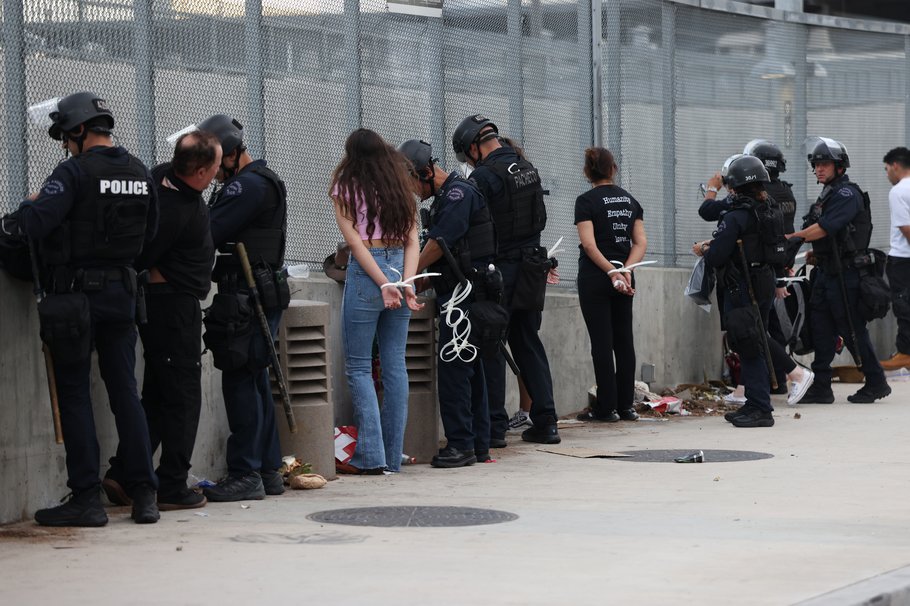
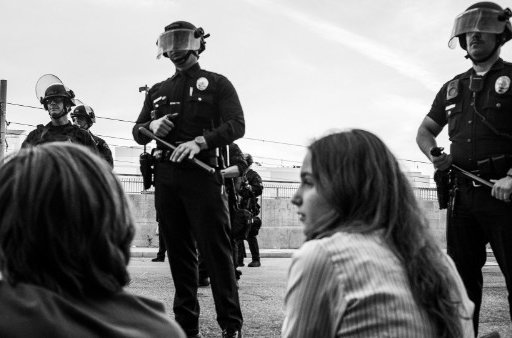
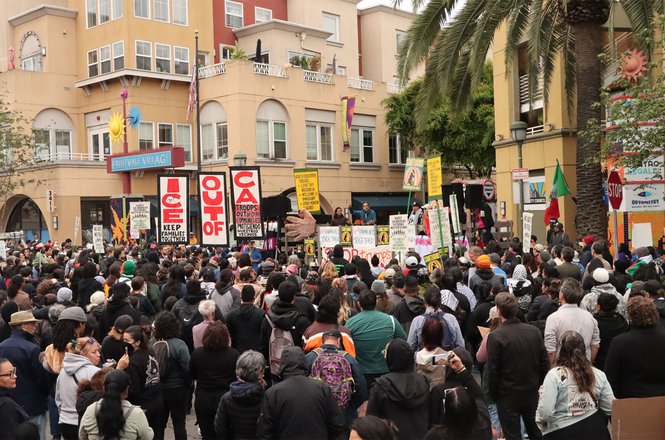
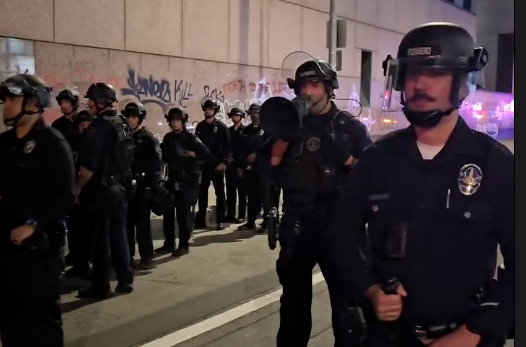
Police arrest protesters in downtown Los Angeles, California, after a “No Kings” rally on March 28, 2026. Jose Ossa, a film student documenting the protest, was detained in a police kettle and put in zip ties before being released.
Jose Ossa, a student filmmaker, was detained in a police kettle and placed in zip ties while he was documenting a protest outside an immigration detention center in downtown Los Angeles, California, on March 28, 2026.
LA’s “No Kings” protest was one of some 3,300 demonstrations against Trump administration policies that took place that day across the U.S., drawing more than 8 million people nationwide, organizers said.
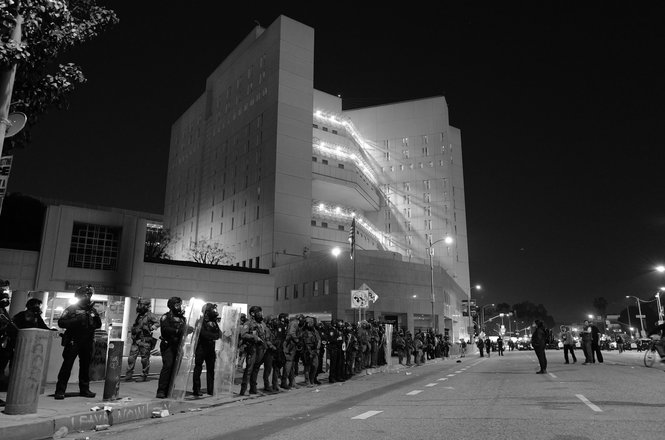
After the main protest march, people gathered outside the Metropolitan Detention Center, where immigrants are held, and the Roybal Federal Building, locations where many demonstrations have centered since sweeping immigration enforcement began in the city in June 2025. The LA Police Department said 75 people were arrested after officers issued a dispersal order and declared an unlawful assembly.
Ossa, a student in film and TV production at California State University, Dominguez Hills, told the U.S. Press Freedom Tracker that he and fellow student Giovanni Cruz went to the protest to capture B-roll footage for a documentary about photography as social activism they’re working on for a course.
Ossa was carrying a cinema camera, and Cruz was carrying a Fujifilm photo camera, clearly indicating that both were there to document the protest.
Ossa said they went to the area near the detention center to try to meet up with a photographer they had interviewed as part of their film project. But as they approached the adjacent intersection, Ossa said his eyes and later his respiratory system were affected by the residue of a chemical irritant in the air, even though he was wearing a mask and goggles. They had to retreat from the area twice before the air cleared.
They eventually were able to approach the gate of the detention center, where protesters had gathered, and saw that police behind the gate had started to come out and were throwing individuals to the ground and detaining them, he said.
The LAPD then started setting up blockades that penned in the protesters and press who were in front of the detention center, Ossa said. Police began to push inward from both directions, effectively sandwiching the crowd, and then closed off the group in a semicircle to form a kettle.
Ossa said that police allowed some, but not all, members of the press who were in the kettle to leave.
Ossa, holding his cinema camera and student ID, made his way to the front and informed the same officer twice that he and Cruz were students and were there to film a documentary. He asked if they were allowed to leave, but got little reaction from the officer.
Around 15 minutes later, Ossa went to the side of the kettle and relayed the same information to a row of four officers, again asking to leave. The officers did not respond.
“There was no effort made to get me and my classmate, Giovanni, out of there, even though we were members of the press. We were clearly there to document.”
Ossa said he and Cruz remained in the kettle as police grabbed and arrested others, further compressing the group. He said he was growing more anxious as the night wore on and the situation remained volatile, and was especially concerned about the implications of an arrest.
Eventually, the two students were the only people remaining in the kettle. The police called Ossa over and aggressively told him to put down his camera and backpack, and to put his hands behind his back. They continued to repeat the commands even though he was complying, Ossa said.
They then roughly put his hands in zip ties, asking him questions about the camera he was carrying — which belonged to his professor — including how much it cost.
He said a lead officer questioned him about why they were there. Ossa explained again, in detail, that he and Cruz were students making a documentary.
After around five minutes, that officer said the two students could go, indicating that he was doing them a favor, Ossa said. The officer told the student journalist that he could have confiscated the camera and detained them.
In response to a request for comment about the cases of Ossa, Cruz and other journalists who faced press violations that day, the LAPD said it is reviewing the claims and would provide a statement at a later date.
A September preliminary injunction barred LAPD officers from interfering with journalists covering protests, including by arresting, detaining or citing them solely for failing to disperse.
The U.S. Press Freedom Tracker catalogs press freedom violations in the United States. Email tips to [email protected].