Incident details
- Date of incident
- August 16, 2025
- Targets
- Aaron Smith (Independent)
- Assailant
- Law enforcement
- Was the journalist targeted?
- Yes
Assault
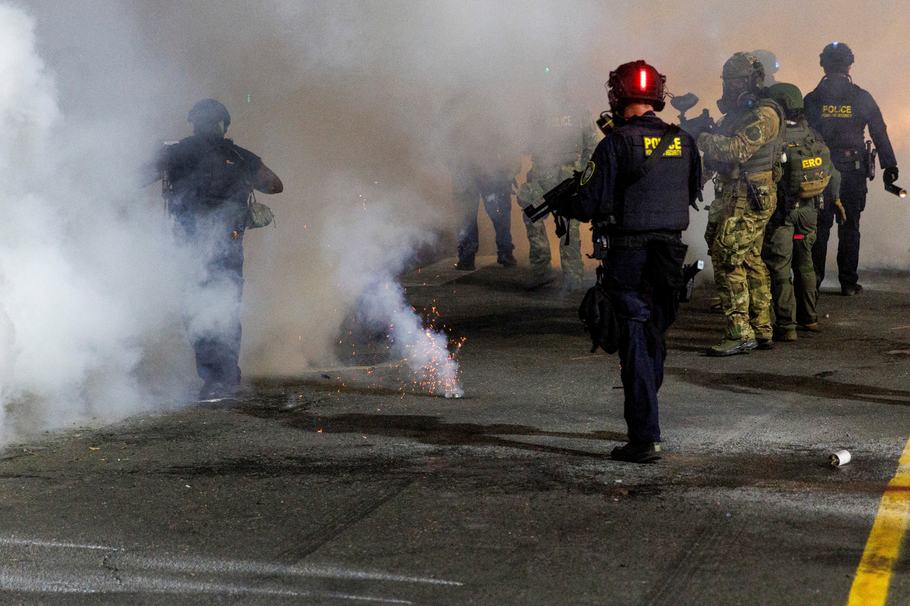
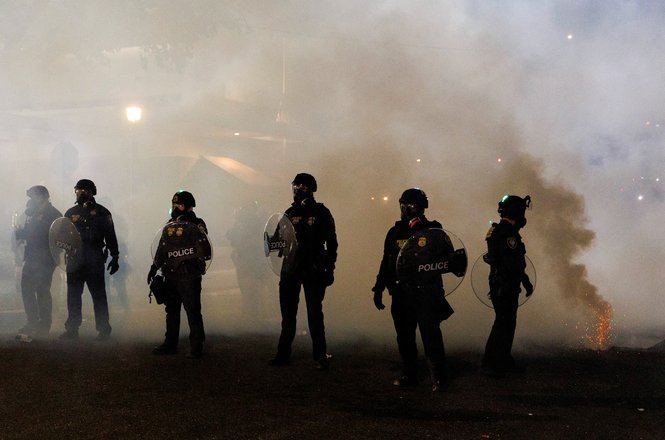
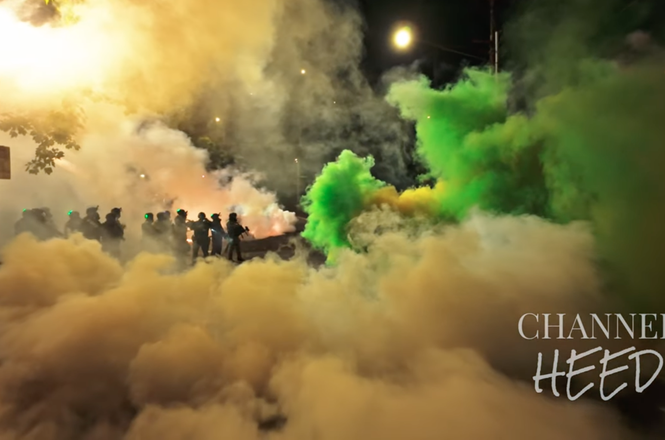
Tear gas and smoke envelop federal agents at anti-deportation protests outside a detention facility in Portland, Oregon, on Sept. 1, 2025. At Aug. 16 protests, videographer Aaron Smith was shot repeatedly with crowd-control munitions while filming.
Independent videojournalist Aaron Smith was shot repeatedly with crowd-control munitions and struck with a shield while documenting anti-deportation protests outside a federal immigration building in Portland, Oregon, on Aug. 16, 2025.
Protests began in early June, in response to the implementation of mass deportation policies under President Donald Trump’s second administration, and were centered around an Immigration and Customs Enforcement building in Portland’s South Waterfront neighborhood.
In a declaration filed in connection with a class-action lawsuit against Trump and his Homeland Security secretary, Smith wrote that he had been gathering footage of the demonstrations for an independent documentary and was clearly present in a journalistic capacity.
“I wore a vest that said ‘MEDIA’ in large letters on the front and back,” he wrote. “I was carrying professional photography equipment to do my job, specifically, a Sony camera.”
The protesters were demonstrating peacefully, according to Smith, dancing in a cha-cha line on the public sidewalk in front of the ICE building when federal officers emerged and opened fire with crowd-control munitions.
“They did not issue any kind of warning first. They just started shooting their guns into the crowd,” he wrote. “They fired less lethal munitions and tear gas into the crowd. It looked to me like they were targeting media, legal observers, and medics.”
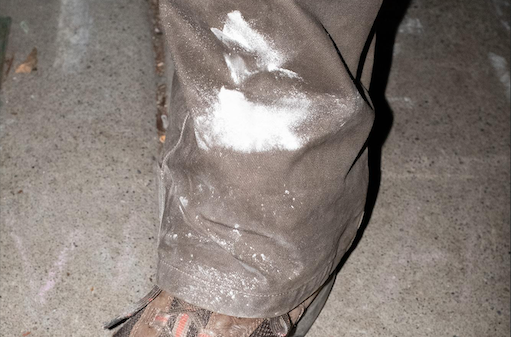
Smith himself was shot “many times” by the agents, likely using pepper balls or other impact projectiles, striking him predominantly in the chest and right leg.
“I was walking in front of the ICE building in order to film, near the front of the crowd,” he added. “I was simply trying to record the events; I was not doing anything that was threatening to anyone.”
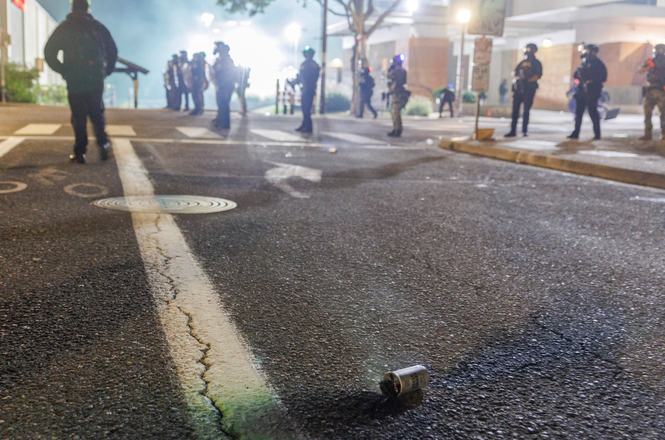
Later that evening, federal officers again emerged from the building, but this time carrying shields.
“I was at the corner, five to ten feet away from the federal agents, when a federal agent came at me and struck me twice with his shield as other agents beat the crowd back indiscriminately,” Smith wrote. “An officer also tried to mace me immediately after I was struck with the shield, but luckily I had my gas mask on.”
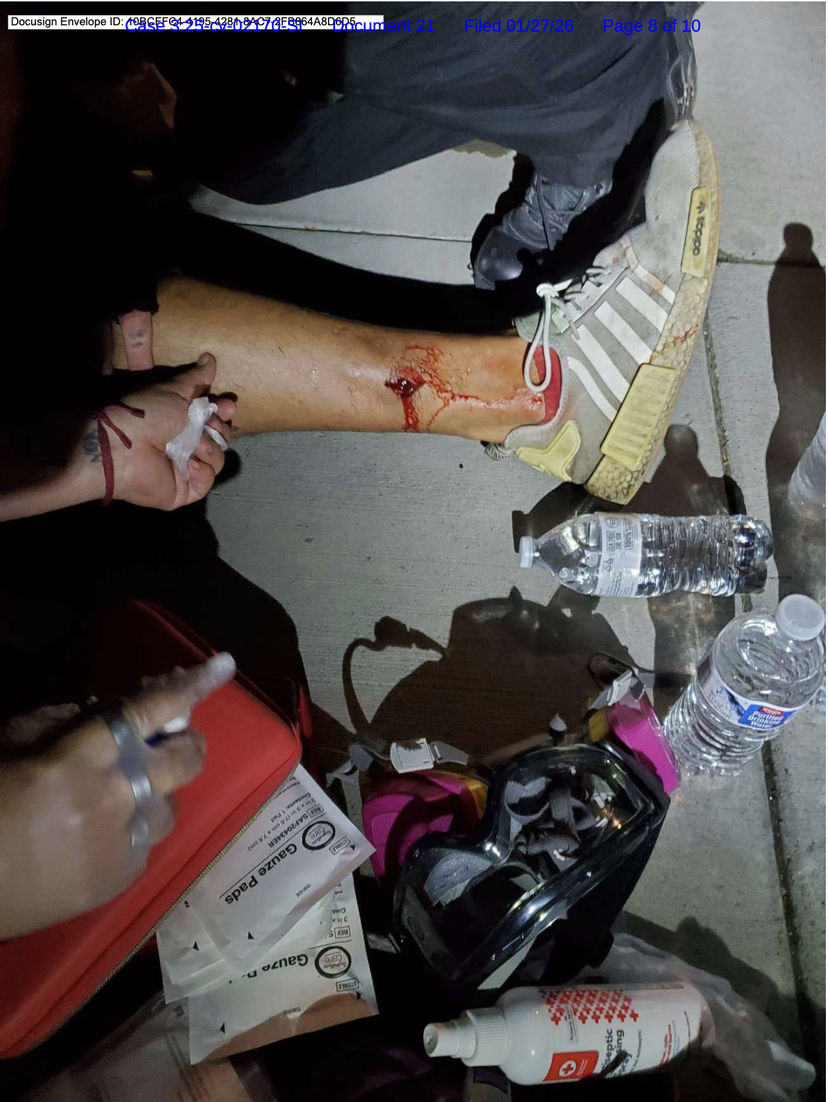
Independent videographer Aaron Smith receives emergency medical treatment after he was shot in the leg with a tear gas canister while filming anti-deportation protests outside a federal detention facility in Portland, Oregon, on Aug. 16, 2025.
— SCREENSHOTHe was also struck in the leg with a tear gas canister, causing a wound that required at least seven stitches.
“This direct hit caused a three-centimeter wound and skin tissue damage. After I was hit, I experienced immediate pain, shock, and disorientation. In my shock, I did not turn off my camera and the battery died, so I was not able to document the aftermath of being hit,” Smith wrote.
The videographer said that he had to take two weeks off to recover, during which he struggled with his mental health and the realities of the incident.
Smith’s declaration — which also detailed how he was shot with multiple projectiles amid protests Sept. 1 — was part of a class-action lawsuit filed in November by the American Civil Liberties Union of Oregon on behalf of freelance journalists Mason Lake and Hugo Rios, as well as three protesters.
The suit alleges indiscriminate, retaliatory violence by Department of Homeland Security agents at protests at the ICE facility in Portland.
“Despite the overwhelmingly peaceful activity, the Trump Administration has falsely characterized the building as ‘under siege’ and has authorized ‘full force’ in response,” the ACLU said in its summary of the case. “The lawsuit challenges these blatant attempts to retaliate against protesters and journalists and interfere with fundamental rights enshrined in the First Amendment to the U.S. Constitution.”
The federal district court in Oregon granted initial class certification in the suit in March 2026.
DHS did not respond to an emailed request from the U.S. Press Freedom Tracker.
The U.S. Press Freedom Tracker catalogs press freedom violations in the United States. Email tips to [email protected].