Incident details
- Updated on
- Date of incident
- January 14, 2026
- Location
- Alexandria, Virginia
- Equipment searched or seized
- Status of equipment
- In custody
- Search warrant obtained
- Yes
Equipment Search or Seizure
- Legal orders
-
-
warrant
for
communications or work product
- Jan. 14, 2026: Carried out
-
warrant
for
communications or work product
- Legal order target
- Journalist
- Legal order venue
- Federal
Subpoena/Legal Order
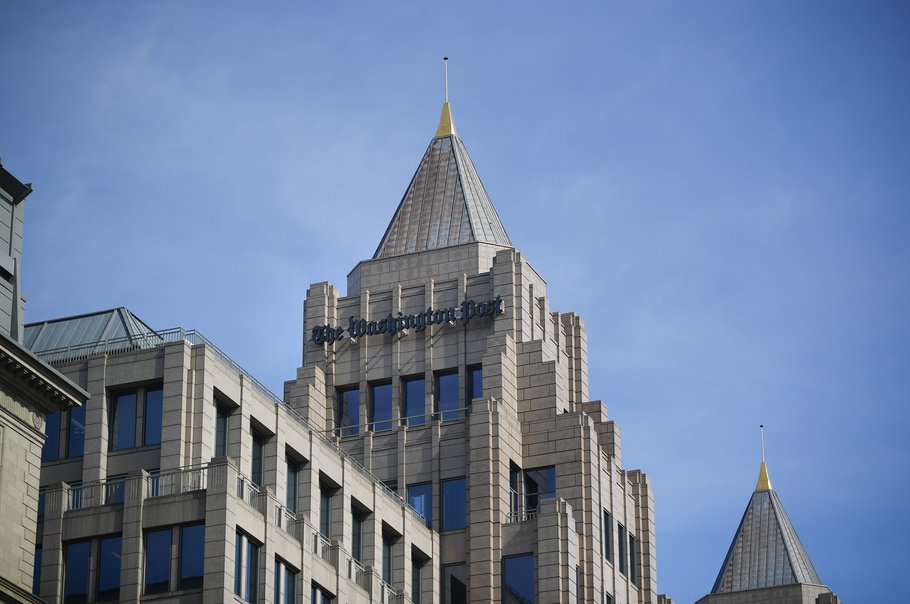
Hannah Natanson, reporter for The Washington Post, pictured above, was the target of a federal search warrant on Jan. 14, 2026. As part of an investigation into a government contractor, FBI agents searched her Virginia home and seized several devices.
Court says it will search journalist’s seized devices, not federal government
A federal judge in Alexandria, Virginia, ruled on Feb. 24, 2026, that the court will search the electronic devices seized from Washington Post reporter Hannah Natanson’s home, not U.S. government officials.
U.S. Magistrate Judge William B. Porter declined Natanson’s request for the return of her equipment but ordered that all information on her devices not covered by the government’s search warrant must be returned to her.
The equipment was seized Jan. 14 in connection with an investigation into a government contractor accused of illegally retaining classified materials.
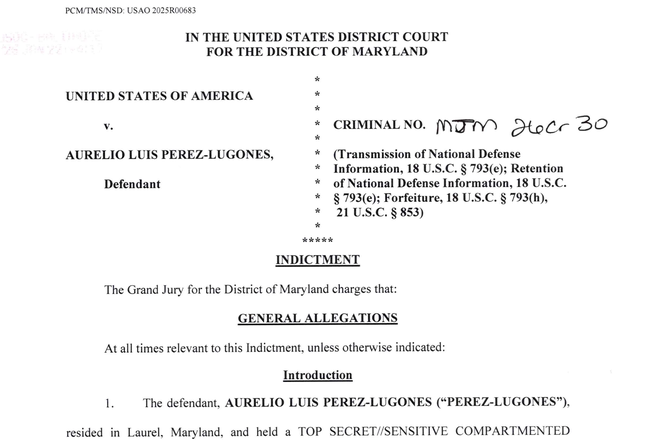
The search warrant on Natanson’s home references systems administrator Aurelio Luis Perez-Lugones, with whom she acknowledged communicating via Signal and phone, according to a court filing by Natanson. Perez-Lugones has since been arrested and charged with retaining classified materials and sharing them with an unnamed journalist, believed to be Natanson.
“Given the documented reporting on government leak investigations and the government’s well-chronicled efforts to stop them, allowing the government’s filter team to search a reporter’s work product—most of which consists of unrelated information from confidential sources—is the equivalent of leaving the government’s fox in charge of the Washington Post’s henhouse,” Porter wrote.
“The government acknowledges that it established probable cause to obtain only a small fraction of the material it seized,” Porter added. He noted that Natanson’s First Amendment rights had been “restrained” by the loss of her reporting equipment and access to sources.
“The government’s proposed remedy—that she simply buy a new phone and laptop, set up new accounts, and start from scratch—is unjust and unreasonable,” Porter wrote.
Previously, at a Feb. 20 hearing, Judge Porter had admonished government attorneys for their failure during his consideration of the initial search warrant to bring up the Privacy Protection Act, which severely limits such raids on journalists.
“This omission has seriously undermined the Court’s confidence in the government’s disclosures in this proceeding,” he wrote in his ruling.
The court will conduct an independent review of the seized materials, with the next status conference in the matter scheduled March 4.
Judge rules government can’t search reporter’s devices
A federal judge in Alexandria, Virginia, ruled on Jan. 21, 2026, that U.S. government officials cannot search the electronic devices seized from Washington Post reporter Hannah Natanson’s home until litigation over the seizure is resolved.
U.S. Magistrate Judge William B. Porter ordered the government to preserve but not review materials gathered from Natanson’s phone, Garmin watch and two laptops (one personal and the other issued by the Post), as well as an audio recorder and external hard drive. The equipment, detailed in a declaration by Natanson, was seized Jan. 14 in connection with an investigation into a government contractor accused of illegally retaining classified materials.
Porter’s order came in response to a request by the Post and Natanson to put the government’s search of the materials on hold. A hearing on their second motion, for the return of the seized materials, is scheduled for Feb. 20.
The search warrant on Natanson’s home references systems administrator Aurelio Luis Perez-Lugones, with whom she acknowledged communicating via Signal and phone, according to a court filing by Natanson. Perez-Lugones has since been arrested and charged with retaining classified materials.
The Post’s attorneys, in their filing, argued, “The outrageous seizure of our reporter’s confidential newsgathering materials chills speech, cripples reporting, and inflicts irreparable harm every day the government keeps its hands on these materials.”
Anything less than the return of the seized materials, they added, “would license future newsroom raids and normalize censorship by search warrant.”
Update: This incident has been revised to include additional equipment seized from Hannah Natanson and a new court date for the hearing on her motion.
Hannah Natanson, a reporter for The Washington Post, was the target of a federal search warrant on her home in Alexandria, Virginia, the early hours of Jan. 14, 2026, in connection with an investigation into a government contractor accused of illegally retaining classified materials, the Post reported.
Natanson, who covers Trump’s reshaping of the government, was at her home when FBI agents executed the search and seized her phone, Garmin watch and two laptops — one personal and the other issued by the Post. Natanson could not immediately be reached for comment.
According to the Post, investigators told Natanson that the focus of the probe is Aurelio Perez-Lugones, a systems administrator in Maryland with top-secret security clearance. He was arrested Jan. 8 and charged with unlawful retention of national defense information after agents found classified materials in his vehicle. Perez-Lugones has not been charged with disseminating the materials.
In April 2025, U.S. Attorney General Pam Bondi reversed the Biden-era policies that protected journalists from having their records seized or from being forced to testify in connection with leak investigations. She asserted, however, that such measures would only be used as a last resort.
The Post reported that the search warrant and device seizures marked Natanson’s first interaction with investigators.
In a statement posted to social media, Bondi alleged that Natanson was “obtaining and reporting classified and illegally leaked information from a Pentagon contractor.”
“The leaker is currently behind bars,” Bondi continued. “The Trump Administration will not tolerate illegal leaks of classified information that, when reported, pose a grave risk to our Nation’s national security and the brave men and women who are serving our country.”
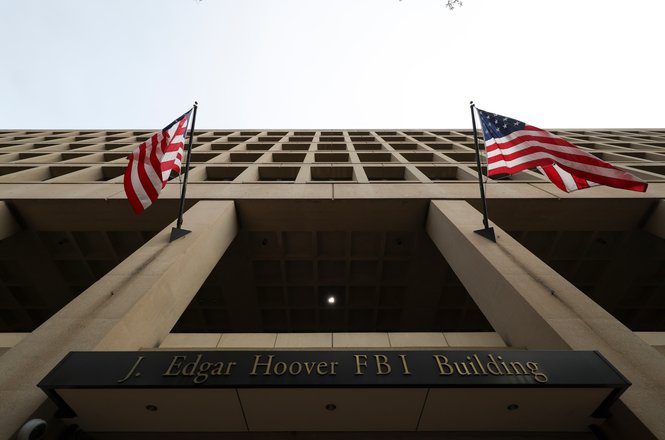
The FBI did not immediately respond to a request for comment.
The U.S. Press Freedom Tracker catalogs press freedom violations in the United States. Email tips to [email protected].